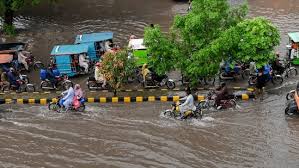
Pakistan Monsoon Toll Hits 116 — PMD Warns of Flash Floods, Urban Flooding
ISLAMABAD — July 15, 2025: The relentless monsoon rains continue to wreak havoc across Pakistan, pushing the nationwide death toll to 116 after five more fatalities were reported within the last 24 hours, the National Disaster Management Authority (NDMA) confirmed on Tuesday.
Since the start of the monsoon spell on June 26, at least 212 people have sustained injuries, while thousands have been displaced due to widespread flooding and infrastructure damage.
Heavy Rains to Continue: PMD Issues Fresh Alerts
The Pakistan Meteorological Department (PMD) has forecast more heavy rains, thunderstorms, and strong winds across large parts of the country through July 17, warning of potential flash floods, landslides, and urban flooding in vulnerable regions.
According to PMD officials:
- Widespread rain is expected in Punjab, Islamabad, Khyber-Pakhtunkhwa (KP), and Azad Jammu and Kashmir (AJK).
- Scattered heavy showers may drench northeast and southern Balochistan, upper and southeastern Sindh, and Gilgit-Baltistan (GB).
- Bahawalnagar recorded the highest 24-hour rainfall at 86mm, exacerbating flood risks.
High-Risk Flood Zones: Authorities Issue Warnings
The NDMA and PMD have sounded alarms for possible flooding in local streams, hill torrents, and urban drains in the following areas:
- Dera Ghazi Khan, northeastern and upper Punjab, Islamabad/Rawalpindi, northeastern Balochistan, Kashmir, Chitral, Swat, Shangla, Mansehra, Murree, Galiyat, Kohistan, Abbottabad, Buner, Swabi, Nowshera, and Mardan.
Residents in mountainous regions like Rajanpur and DG Khan are on high alert for rising hill torrents originating from the Pir Panjal Range.
Urban Flooding Threat Looms Over Major Cities
Urban centres — including Lahore, Rawalpindi, Gujranwala, Sialkot, Muzaffargarh, Sahiwal, Multan, Kot Addu, and Bahawalpur — are expected to experience continuous downpours from July 15 to 18, with local authorities warning of:
- Road inundations
- Blocked drainage systems
- Traffic gridlocks
- Possible power outages
Experts say the intensity of Pakistan’s monsoon rains underscores the growing threat of climate change, which has made extreme weather events more frequent and severe in South Asia.
Read More: How Pakistan’s Monsoon Season Has Intensified in Recent Years.
NDMA Urges Preparedness
In its latest advisory, the NDMA urged residents in high-risk areas to:
✅ Prepare emergency kits with food, clean water, and medicines for at least 3–5 days.
✅ Stay updated on local weather reports and evacuation orders.
✅ Avoid unnecessary travel during heavy downpours.
Communities in Khyber-Pakhtunkhwa’s hilly districts — including Chitral, Dir, Swat, Kalam, Mansehra, Abbottabad, Mardan, Peshawar, Kohat, Bannu, and Waziristan — face a high risk of landslides that could disrupt road networks and isolate towns.
Climate Change Impact
Experts say the intensity of Pakistan’s monsoon rains underscores the growing threat of climate change, which has made extreme weather events more frequent and severe in South Asia.
Environmentalists are calling for:
- Improved drainage and flood protection infrastructure in urban and rural areas.
- Stricter zoning laws to prevent settlements in flood-prone zones.
- Better early warning systems to safeguard vulnerable communities.
Voices From the Ground
Local residents in flooded regions described scenes of devastation:
“Water has entered our homes. Roads are submerged, and we have no electricity for hours,” said Ali Hassan, a resident of Sahiwal.
Relief agencies are working round-the-clock to evacuate families stranded by rising floodwaters.