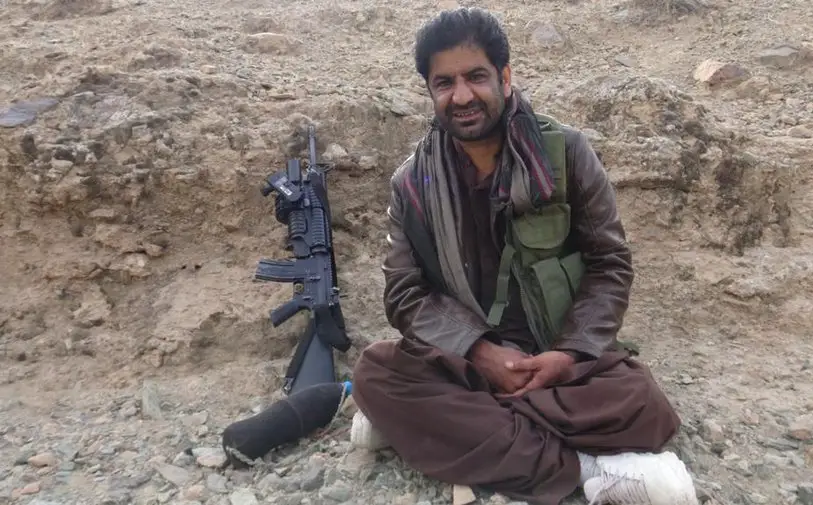
High-value militant captured: Founder of banned Baloch group arrested in Pakistan
The capture of Gulzar Imam, a “hardcore militant” and founder of the banned Baloch National Army (BNA), is a significant development in Pakistan’s fight against terrorism.
The Inter-Services Public Relations (ISPR) has reported that Imam was captured in a sophisticated and meticulously executed operation after several months. The individual, considered a “high-value target,” is suspected of having ties to hostile intelligence agencies operating against Pakistan.
The ISPR’s statement does not disclose the exact location where Imam was apprehended. However, the military’s success in capturing a high-profile militant leader of such a stature speaks volumes about the capabilities and resolve of the country’s law enforcement agencies (LEAs) to uproot the menace of terrorism.
Imam’s capture comes at a critical juncture when Pakistan is facing a deteriorating law and order situation. Over the past few months, terrorist groups have executed attacks with near impunity across the country, targeting law enforcement agencies, security forces, and civilians alike.
At least 44 militant attacks occurred across the country in January 2023, resulting in the deaths of 134 individuals and injuries to 254 others. This made it one of the deadliest months since July 2018.
The TTP, Pakistan’s main militant group, intensified its attacks after the talks with the government broke down in November. The group particularly targeted the police in Khyber Pakhtunkhwa and areas bordering Afghanistan.
As the situation progressed, the insurgents in Balochistan increased their violent operations and established a connection with the TTP.
The arrest of Imam, the leader and founder of the militant group BNA, which was formed by merging the Baloch Republican Army (BRA) and the United Baloch Army (UBA), is a major setback not only for the group but also for other militant outfits striving to disrupt the peace in Balochistan that was achieved after numerous efforts.
Imam’s involvement in creating the Baloch Raji Aajoi Sangar (BRAS) and serving as its operational chief is also significant. The authorities are investigating his visits to India and Afghanistan, as well as his connections with intelligence agencies that are considered hostile.
The military’s statement highlights that hostile agencies tried to exploit the militant to work against Pakistan’s national interests. However, the LEAs’ success in capturing such a high-profile militant leader underscores their capabilities and dedication to thwarting terrorism and preserving the country’s security and stability.
The capture of Gulzar Imam is undoubtedly a significant achievement in Pakistan’s fight against terrorism. It demonstrates the effectiveness of the country’s LEAs, who have worked tirelessly to uproot the menace of terrorism and preserve the country’s peace and stability.
However, the capture of a single militant leader is not enough to eliminate the threat of terrorism. Pakistan must continue its efforts to counter militant groups and their nefarious designs to destabilize the country. These efforts must include improved intelligence gathering, better coordination among LEAs, and effective implementation of counterterrorism measures.
Moreover, Pakistan must address the root causes of militancy, including political and economic marginalization, social injustice, and the proliferation of extremist ideologies. The government must ensure that all sections of society have equal access to political, economic, and social opportunities, and marginalized communities must be given a voice in the country’s governance.
Additionally, Pakistan must continue its efforts to engage with neighboring countries, particularly Afghanistan and India, to address the issue of cross-border terrorism. Improved cooperation and dialogue can help reduce the mistrust and animosity between countries and promote regional peace and stability.
Read More: LHC allows public interest petitions against section 124-A
The capture of Gulzar Imam, a high-profile militant leader with suspected links to hostile intelligence agencies, is a significant achievement for Pakistan’s LEAs. However, Pakistan must continue its efforts to counter militant groups and address the root causes of militancy to eliminate