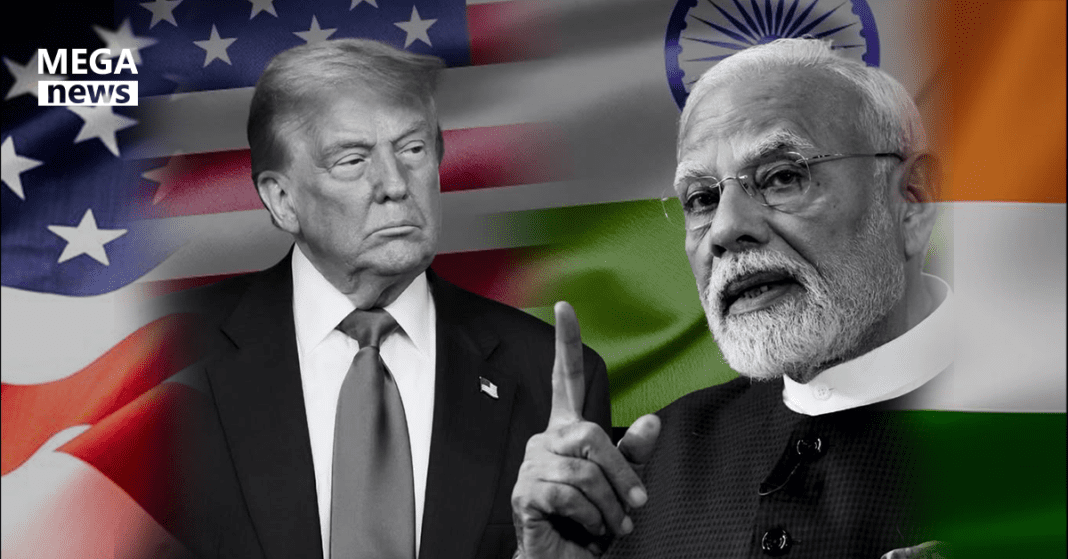
WASHINGTON / NEW DELHI: US President Donald Trump on Monday announced a significant trade agreement with India, asserting that Prime Minister Narendra Modi has agreed to halt purchases of Russian oil — a key shift amid long-standing geopolitical and economic tensions between the two countries.
In a statement shared on his social media platform, Truth Social, Trump said the deal was agreed “out of friendship and respect for Prime Minister Modi” and would take effect immediately. Under the arrangement, the United States will reduce reciprocal tariffs on Indian goods to 18 per cent, down from previously higher levels that had reached as much as 50 per cent due to punitive trade measures.
A White House official confirmed that the additional 25 per cent tariff imposed last year over India’s purchase of Russian oil would also be withdrawn as part of the agreement.
Trump framed the deal as part of a broader effort to address the war in Ukraine, saying Modi’s pledge to stop buying oil from Russia — and instead potentially increase imports from the US and Venezuela — would “help END THE WAR in Ukraine.”
The US and Indian leaders also reportedly agreed on measures to expand energy and goods trade, with Trump claiming India would purchase up to $500 billion worth of American products, including energy, technology, and agricultural goods.
Prime Minister Modi publicly welcomed the tariff reduction, describing his discussion with Trump as “wonderful” and expressing gratitude for easing trade restrictions on Indian products. However, Modi’s official remarks did not explicitly confirm India’s policy shift on Russian oil purchases.
The trade deal marks a major recalibration in US-India economic ties after months of negotiations and tariff escalation that strained bilateral relations. It also comes against the backdrop of broader geopolitical competition and efforts by Washington to limit Russia’s global economic influence.
While Trump’s announcement reflects bold claims of strategic alignment, details on how and when India would fully halt Russian oil imports remain closely watched by global markets and geopolitical analysts.