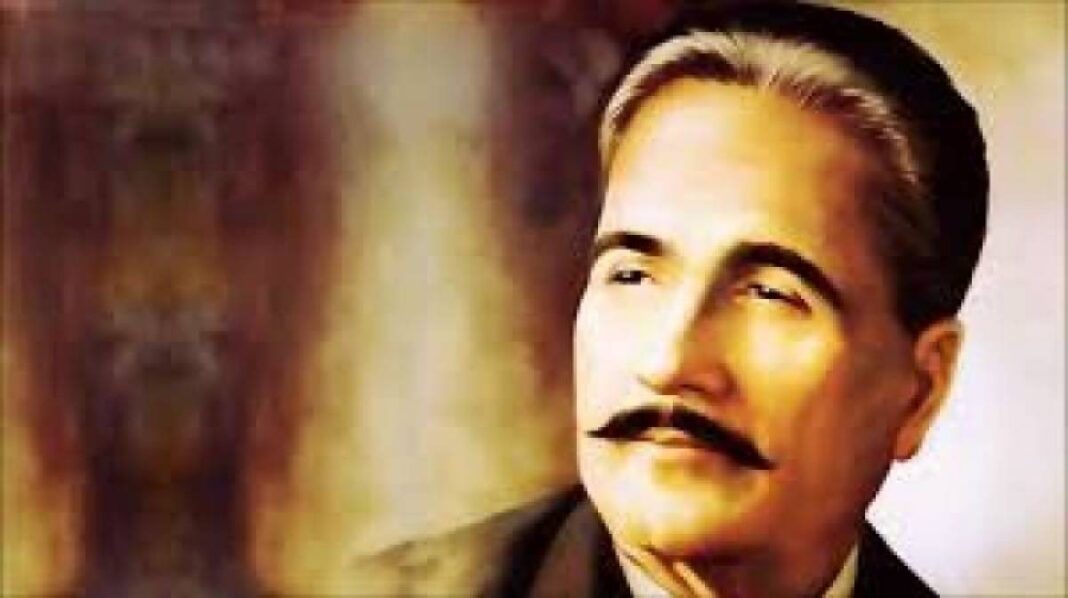
Indian authorities are considering the exclusion of a chapter on Pakistan’s national poet, Muhammad Iqbal, commonly known as Allama Iqbal, from the syllabus of the bachelor’s sixth year. The decision, currently under discussion by the Academic Council of Delhi University, has sparked a contentious debate regarding historical inclusivity and India’s approach towards its neighboring country.
The Controversial Move:
The decision to remove the chapter on Allama Iqbal has been welcomed by a right-wing student body, the Rashtriya Swayamsevak Sangh-affiliated Akhil Bharatiya Vidyarthi Parishad (ABVP). In a statement, they argue that Iqbal, referred to as the “philosophical father of Pakistan,” played a crucial role in establishing Muhammad Ali Jinnah as a leader in the Muslim League, thereby sharing responsibility for the partition of India.
The Chapter in Question:
The chapter titled “Modern Indian Political Thought” is part of the political science syllabus for the BA’s sixth semester. Its removal awaits the final decision from the university’s Executive Council. This chapter explores various aspects of Allama Iqbal’s work and influence, particularly his role in shaping political thought in India. One of the units within the chapter, “Iqbal: Community,” aims to study important themes through the perspectives of individual thinkers. The syllabus emphasizes providing students with a comprehensive understanding of the richness and diversity within Indian political thought.
Allama Iqbal’s Significance:
It is important to note that Allama Iqbal’s iconic piece of patriotic poetry, “Saare Jahan se Accha,” holds a significant place in Indian culture. The poem praises the country and was written in the early 20th century, celebrating Hindustan, which encompassed present-day Pakistan, India, and Bangladesh.
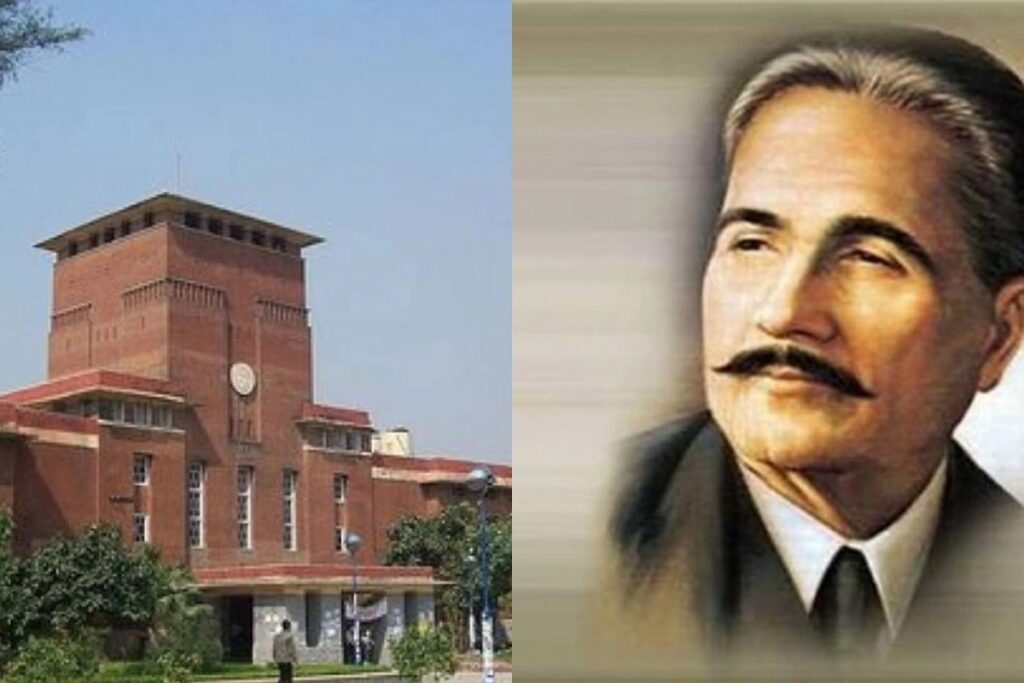
Pakistan’s National Poet:
However, Allama Iqbal is predominantly recognized as Pakistan’s national poet due to his influential role in advocating for a separate homeland for Muslims, which eventually led to the creation of Pakistan. This disparity in recognition has contributed to the controversy surrounding his inclusion in the Indian syllabus.
Debating Historical Objectivity and Inclusivity:
The decision to expunge the chapter on Allama Iqbal raises concerns about historical objectivity and the inclusivity of India’s educational system. Critics argue that removing an influential figure like Iqbal from the curriculum limits students’ exposure to diverse perspectives and hampers their understanding of the complex history shared by India and Pakistan.
While it is crucial to acknowledge the sensitivities surrounding partition and its aftermath, it is equally important to foster an environment of academic rigor and intellectual openness within educational institutions. Engaging with different viewpoints and historical figures allows students to develop a broader understanding of India’s multifaceted history and its relationship with neighboring countries.
The Final Decision:
The ultimate decision on whether to remove the chapter on Allama Iqbal rests with the Executive Council of Delhi University. Regardless of the outcome, it will undoubtedly shape the ongoing discourse surrounding historical education in India and the nation’s approach to comprehending its past.
Read more: India’s G20 Meeting in IIOJK Met with Global Boycott
The potential exclusion of the Allama Iqbal chapter from the syllabus highlights the complex nature of historical education and its relationship with national identity. Striking a balance between sensitivity and inclusivity is crucial for fostering a comprehensive understanding of history among students. As India grapples with the decision, it is essential to consider the long-term implications and the impact on future generations’ historical perspectives.