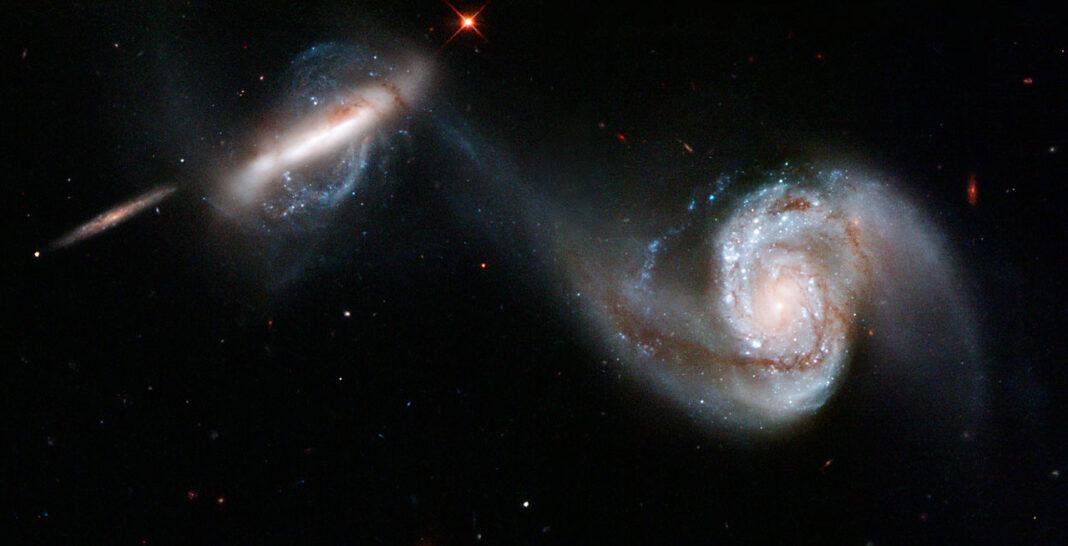
What happens when stars age and swallow their planets
Aging stars in our galaxy have been observed to consume planets, and in a recent study, scientists witnessed one of these stars devouring a Jupiter-sized planet in a single gulp. The star, which was running out of fuel, grew in size until it eventually swallowed the orbiting planet whole.
NASA has reported that this cosmic banquet occurred about 10,000 to 15,000 years ago in the vicinity of the Aquila constellation. The star, which was roughly 10 billion years old at the time, experienced a sudden surge of bright light and subsequent prolonged emission of dust in the form of cold infrared radiation as the planet descended into its core.
The swallow itself was observed for the first time, according to a study published in the journal Nature. Prior to this discovery, astronomers had observed hints of stars feeding on planets, but this recent event marked the first time they were able to directly witness the act of a star swallowing a planet.
Co-author of the study, Morgan MacLeod of the Harvard-Smithsonian Center for Astrophysics, predicted that our sun will undergo a similar aging process in about 5 billion years, reaching possibly 100 times its current diameter and becoming what is known as a red giant. During this growth spurt, it will absorb Mercury, Venus, and possibly Earth.
Nonetheless, he offered a small comfort by stating that this event is not expected to occur until approximately five billion years in the future. The brightening burst was spotted by researcher Kishalay De from the Massachusetts Institute of Technology in 2020 while reviewing sky scans captured by the California Institute of Technology’s Palomar Observatory. Astronomers do not know if more planets are circling this star at a safer distance, and if so, they may have thousands of years before becoming the star’s second or third course, said De.

As Kishalay De warned, everything we have created or built will vanish in an instant. This discovery has prompted scientists to search for similar incidents, leading them to estimate that other planets in orbit around stars will also meet the same fate. Carole Haswell, an astrophysicist at Britain’s Open University, said that “This is a different sort of eating. While previous studies showed hot Jupiters being delicately nibbled and licked, this star consumed an entire planet in one gulp. In 2010, De led a team that identified a star WASP-12 in the process of eating its planet with the help of the Hubble Space Telescope.
Mansi Kasliwal, who was a part of the research team and is affiliated with Caltech, mentioned that the act of the star consuming the planet was a relatively brief event, considering the star’s lifespan of billions of years, as it happened quickly and in a single instance.
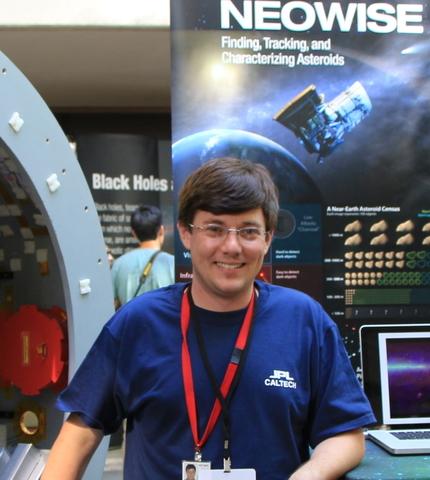
“This discovery shows that it’s worthwhile to take observations of the entire sky and archive them because we don’t yet know all of the interesting events we might be capturing,” said Joe Masiero, deputy principal investigator for NEOWISE at IPAC at Caltech. According to Masiero, the NEOWISE archive provides us with the opportunity to examine past events. It enables us to uncover concealed gems or acquire knowledge about an object that no other telescope can offer.
The discovery of this cosmic cannibalism event raises many questions for astronomers, including how frequently this phenomenon occurs and what other planets around other stars are currently undergoing the same fate. The observation also highlights the need to continually observe and archive the entire sky to capture more incredible events like this one.
Read More: NASA discovers formation process of two planets around TW Hydrae
The recent discovery of a star eating a Jupiter-sized planet in a single gulp is a fascinating insight into the workings of the universe. The study published in the journal Nature sheds light on a rare and amazing observation, highlighting the cosmic cannibalism phenomenon. The findings suggest that as a star grows in size, it may eventually consume any orbiting planets in its path.
This discovery has implications for our own solar system, as it is predicted that our sun will go through a similar aging process in about 5 billion years, potentially absorbing Mercury, Venus, and possibly Earth during its growth spurt. However, there is no need to panic as this process is still billions of years away.