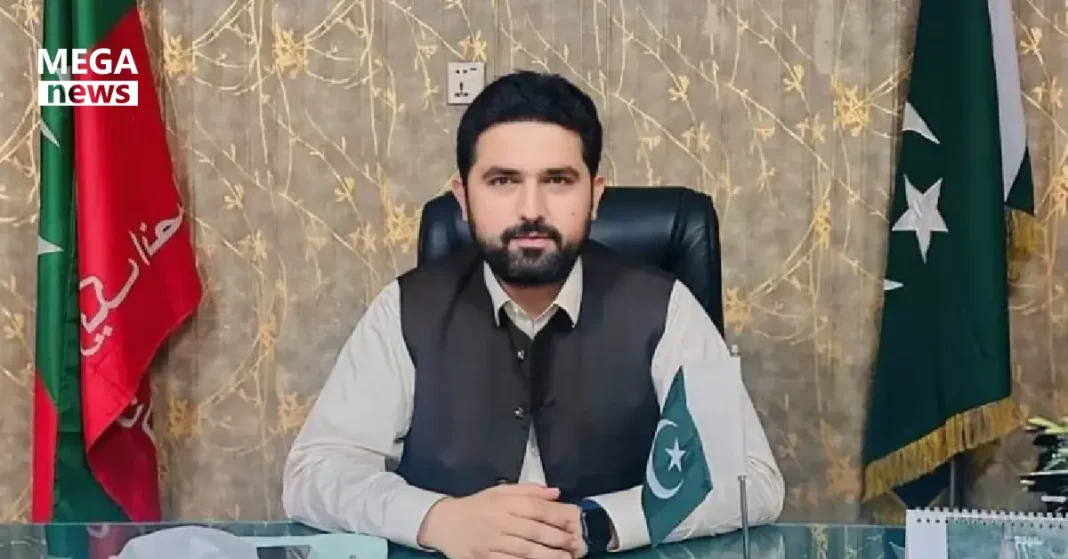
Who is Sohail Afridi, Imran Khan’s Choice to Lead KP?
Pakistan Tehreek-e-Insaf’s (PTI) political landscape in Khyber Pakhtunkhwa (KP) has taken a new turn as Sohail Afridi, a young and dynamic figure, emerges as Imran Khan’s choice to lead the province. His nomination follows the resignation of outgoing Chief Minister Ali Amin Gandapur, who stepped down on Imran Khan’s instructions.
READ MORE: Ali Amin Gandapur Resigns as KP Chief Minister After Imran Khan’s Instructions
PTI General Secretary Salman Akram Raja confirmed that the party founder directed Afridi to assume the role of KP’s new chief executive — a move seen as part of PTI’s effort to rejuvenate its provincial leadership with fresh and loyal faces.
At 35 years old, Afridi represents a new generation within PTI’s political ranks. His journey from student activism to the provincial assembly highlights his steady rise through the party’s grassroots structure. Representing PK-70 Bara, Afridi’s political base lies in the heart of Khyber district — a region that has undergone significant transformation over the past decade.
Born in 1989 in Bara tehsil, Afridi graduated with a degree in economics and became involved in student politics early on. His leadership potential first surfaced during his tenure as provincial president of the Insaf Students Federation (ISF) — PTI’s youth wing — where he was instrumental in mobilizing young voters and promoting educational reforms across KP.
His active participation in youth politics helped him build a loyal base among students and first-time voters. This foundation later propelled him into mainstream politics, leading to his election as Member of the Provincial Assembly (MPA) in 2024.
Shortly after his electoral victory, Afridi was appointed Special Assistant to the Chief Minister on Communications, where he contributed to improving KP’s infrastructure and road connectivity projects. His work in the communications sector earned him recognition for implementing development initiatives in remote tribal areas.
Earlier this year, Afridi was promoted to Minister for Higher Education, a position that aligns closely with his academic background and long-standing advocacy for education reform. His appointment came during a cabinet reshuffle, signaling the leadership’s confidence in his ability to handle key governance portfolios.
Within PTI, Afridi is widely regarded as a loyalist to Imran Khan. According to Irfan Saleem, PTI’s additional general secretary and president of the party’s Peshawar chapter, Afridi “stood in the front row whenever Imran Khan called for protest.” He emphasized that Afridi faced hardships, including detentions, during PTI’s struggle, showcasing his commitment to the movement.
“He saw jails for the party,” Saleem said, adding that Afridi’s appointment “proves that PTI rewards loyalty and sacrifice.”
Similarly, PTI’s Deputy Information Secretary Ikram Katahna welcomed the nomination, describing Afridi as “a grassroots worker and a common man like us.” He stated that Afridi’s rise symbolizes PTI’s vision as a party of the people, where leadership positions are earned through dedication rather than privilege.
Afridi’s political journey also reflects a deep understanding of KP’s challenges, particularly in tribal and post-merger districts like Khyber. Colleagues believe his tribal roots, youth appeal, and administrative experience make him well-positioned to rebuild PTI’s image in the province after months of political turbulence.
With Gandapur’s resignation and Afridi’s expected oath-taking, Imran Khan appears to be reshaping KP’s political leadership — aiming to inject new energy into PTI’s provincial government while reasserting control over internal divisions.
As Sohail Afridi prepares to take the helm, expectations are high that he will advance Imran Khan’s reform agenda, strengthen PTI’s governance model, and reduce political polarization in the province.
Afridi’s appointment also signals a strategic generational shift within PTI — one that emphasizes youth empowerment, grassroots leadership, and renewed loyalty to the party founder’s vision.