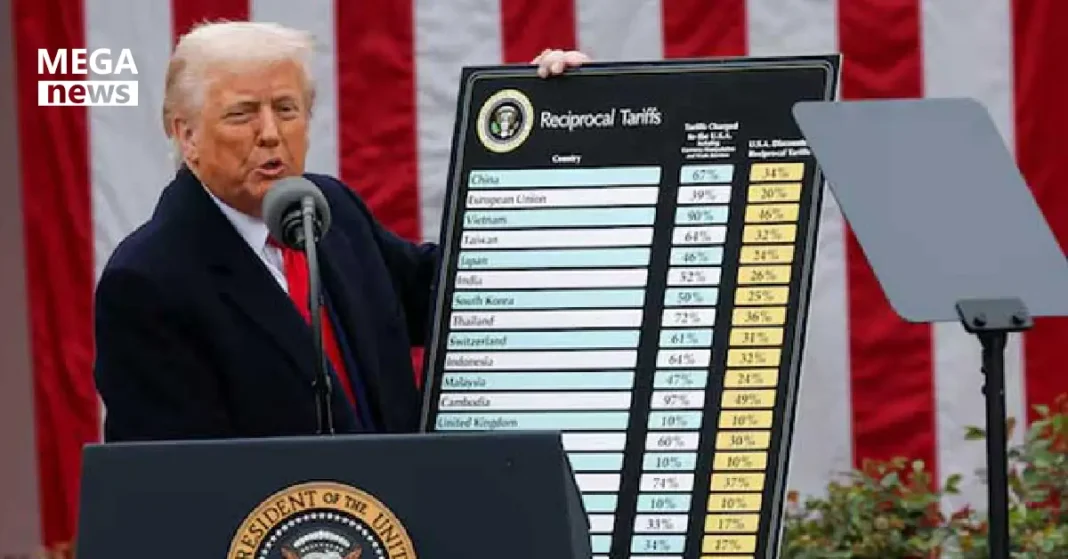
U.S. President Donald Trump has taken a bold step to overhaul the global trade landscape by imposing steep tariffs on goods from over 60 countries, including major economies like India, Canada, Brazil, and Taiwan. The move, announced through a sweeping presidential executive order, introduces new import duty rates ranging from 10% to 50%, as part of Trump’s broader strategy to reduce the U.S. trade deficit and prioritize domestic manufacturing ahead of the upcoming Friday trade deal deadline.
India has emerged as one of the major targets, facing a 25% tariff on a wide range of its exports. The decision follows stalled trade negotiations between Washington and New Delhi, particularly over U.S. demands for broader access to India’s agricultural markets. Trump also hinted at an additional penalty linked to India’s continued energy ties with Russia, including oil purchases—a move that has drawn strong criticism from Indian opposition leaders and triggered a noticeable slump in the rupee. While talks are ongoing, the tariff threat has already caused economic ripples and political pushback in India.
READ MORE: Trump Criticizes India-Russia Trade Ties, Announces 25% U.S. Tariff on Indian Imports
The executive order lists new tariffs to take effect within seven days, applying to 69 countries that either failed to reach trade compromises or were not given the opportunity to negotiate. Some countries did manage to finalize tariff-reducing deals, while others, such as Canada and Brazil, were hit hard. Canada’s goods were struck with a 35% tariff, up from 25%, following Trump’s accusation that Ottawa had failed to crack down on fentanyl smuggling into the U.S. Canadian Prime Minister Mark Carney expressed disappointment, pledging to protect Canadian workers and diversify the country’s exports to counterbalance the U.S. pressure.
In contrast, Mexico secured a 90-day reprieve from a 30% tariff increase after a direct call between Trump and Mexican President Claudia Sheinbaum. About 85% of Mexico’s exports to the U.S. already comply with the USMCA’s rules of origin, protecting them from some of the steepest tariffs. Still, Mexico will continue to face high duties on steel, autos, and non-compliant goods, particularly those connected to Trump’s fentanyl-related emergency declaration.
The steepest blow came to Brazil, with Trump imposing a 50% tariff on most exports. However, strategic exemptions were made for sectors like aviation, energy, and citrus products. The timing of this tariff action appears linked to growing diplomatic tensions over Brazil’s legal actions against former President Jair Bolsonaro, a close ally of Trump.
For India, the consequences of these tariffs are especially critical. India’s economy heavily relies on labor-intensive exports such as textiles, leather, engineering goods, and agriculture-based products—sectors now facing serious risk due to the 25% duty. Analysts fear the move could strain India-U.S. economic ties further, particularly at a time when both countries are vying for influence in the Indo-Pacific and attempting to counterbalance China’s regional ambitions. Trump’s administration has also hinted at further tariffs if India’s responses to American trade and security concerns are deemed inadequate.
Economically, the impact of the new tariffs is already visible in U.S. domestic markets. Recent Commerce Department data revealed sharp price increases in consumer goods categories—furnishings, vehicles, apparel—suggesting that the cost of these trade policies may ultimately fall on American consumers. With prices for household equipment seeing their steepest rise in over two years, critics are questioning whether Trump’s trade war will deliver the manufacturing boost he promised or trigger inflationary pressures.
On the legal front, Trump’s use of emergency powers under the 1977 International Emergency Economic Powers Act has drawn scrutiny from federal judges. During recent appellate court hearings, judges voiced skepticism over whether the president’s actions exceeded his legal authority. The Court of International Trade had earlier ruled that Trump’s tariff maneuvers stretched the limits of executive power, and further legal challenges are now expected.
Meanwhile, all eyes are now on China, which faces an August 12 deadline to finalize a comprehensive tariff deal with Washington. Preliminary talks in May and June made progress on ending reciprocal tariffs and resuming rare earth mineral trade, but a final agreement remains uncertain.
As Trump barrels ahead with his aggressive trade agenda, global markets are bracing for prolonged uncertainty. While Wall Street’s reaction has been more muted this time compared to previous tariff announcements, the broader economic implications of these sweeping trade penalties are still unfolding. With inflation risks rising and international alliances under strain, the world now watches to see if these tariffs will bring the economic transformation Trump promises—or usher in a new era of global trade fragmentation.