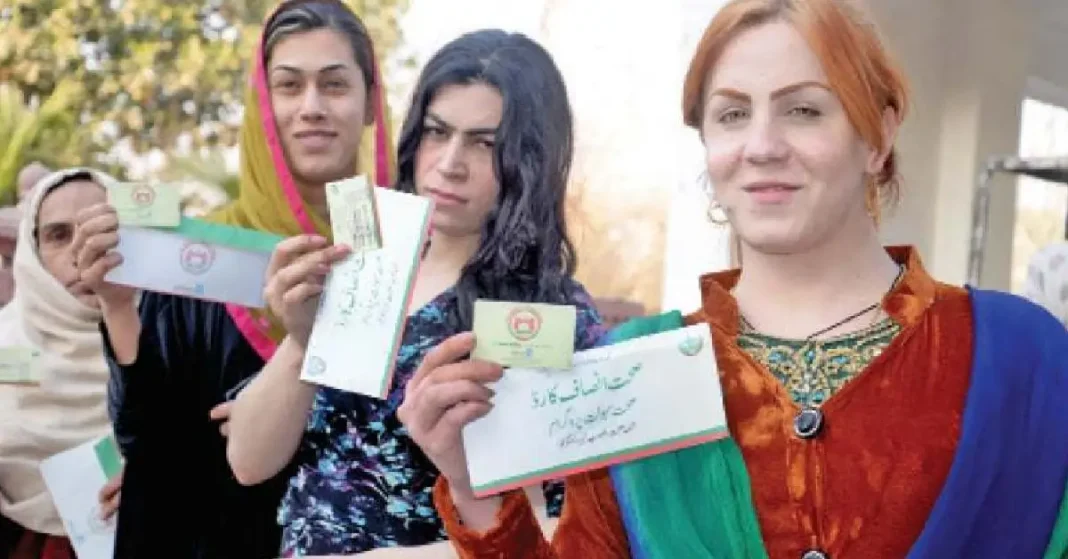
PESHAWAR: Despite being eligible for free healthcare under the Sehat Card Plus, only 15 transgender persons in Khyber Pakhtunkhwa accessed treatment last year.
Data shows that a total of 4.86 million people received cashless healthcare services through the programme, which covers 10.6 million families (around 30 million individuals) registered with NADRA. Of the registered population, 54 percent are men and 46 percent are women, while transgender persons account for just 0.001 percent. Among those who availed treatment through Sehat Card Plus, 54 percent were women, 46 percent were men, and only 0.0003 percent were transgender persons.
Launched in 2016, the free health insurance initiative has benefited roughly five million residents of the province at a cost of Rs136 billion.
Health department officials explained that many transgender individuals prefer to identify as women and are reluctant to register as transgender with NADRA. To date, only 183 transgender persons have been registered in the province, and just 15 have received free medical treatment through the scheme. Officials stressed that all citizens of Khyber Pakhtunkhwa with a national identity card are eligible to access healthcare services at empanelled hospitals, regardless of gender identity.
Qamar Naseem, programme manager at Blue Vein, told Dawn that multiple factors discourage transgender people from registering. Family pressure, concerns about travel restrictions to Gulf countries, and complex procedures for updating identification across banking, inheritance, educational, and employment documents were cited as key obstacles.
Some transgender persons also reported that they see little practical benefit in registration, leading to low participation in the programme. According to TransAction Alliance for Transgender, the estimated transgender population in the province is around 45,000, though official data is lacking.
The provincial Transgender Protection Policy is in its final stages but awaits approval from the law department. Advocates hope that formalizing protections and awareness campaigns will encourage higher registration and access to healthcare services for the transgender community.