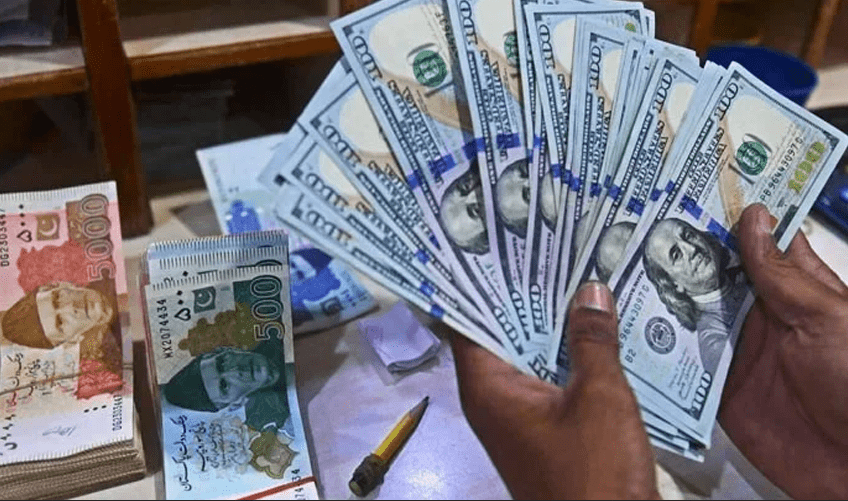
The dollar has experienced a significant decline in value against the Pakistani rupee (PKR) as Pakistan signs a short-term agreement with the International Monetary Fund (IMF) for the next nine months. This development has caused the dollar’s rate to drop by Rs5 in the open market, marking a notable shift in currency dynamics.
Immediate Impact on Currency Exchange Rates
On Monday, the trading session commenced with the American currency losing its value against the rupee by Rs5. As a result, the selling price of the dollar has now reached Rs285, with a buying price of Rs280. However, due to the closure of the interbank market, the exact rate has not been released today, according to Malik Bostan, the president of the Forex Association of Pakistan.
Surge in the Stock Market
In an unexpected turn of events, the Pakistan Stock Exchange (PSX) experienced a remarkable surge in its indices on the first working day following the successful conclusion of a highly anticipated $3 billion deal with the IMF. The stock market witnessed a momentary halt within the first 10 minutes of trading as the KSE30 index soared by an impressive 5%. Consequently, the session resumed later at 10:37 am.
Significant Increase in Stock Indices
The KSE100 index demonstrated a notable upswing of 2,231.1 points, reaching a staggering 43,683.78 points. This surge in stock market indices reflects the positive sentiment among investors regarding the IMF deal and its potential impact on Pakistan’s economy. The agreement with the IMF is expected to provide much-needed financial support and stability, allowing the government to implement crucial economic reforms.
IMF Deal and Its Implications
The agreement between Pakistan and the IMF involves a $3 billion loan package aimed at bolstering the country’s foreign exchange reserves and addressing its economic challenges. The deal is expected to span over the next nine months, during which Pakistan will be required to implement various structural reforms and fiscal measures.
One of the key areas of focus under the IMF agreement is the reduction of Pakistan’s fiscal deficit through revenue enhancement measures and expenditure rationalization. The government is also expected to work on improving tax administration and expanding the tax base to increase revenue collection.
Moreover, the IMF deal emphasizes the importance of monetary policy reforms to stabilize inflation and ensure price stability. Efforts to enhance the independence and transparency of the central bank are likely to be part of the reform agenda.
Positive Market Sentiment and Future Prospects
The immediate positive response from the stock market suggests that investors view the IMF deal as a step in the right direction for Pakistan’s economic stability and growth. The surge in stock market indices reflects the market’s confidence in the country’s economic prospects in light of the financial support provided by the IMF.
However, it is important to note that the long-term success of the IMF program depends on the effective implementation of the agreed-upon reforms by the Pakistani government. This will require concerted efforts and commitment from policymakers to address structural challenges and promote sustainable economic growth.
Read more: Significant drop in June’s Inflation Rate: 29.4 Percent Recorded
As Pakistan signs a short-term agreement with the IMF, the dollar has experienced a decline in value against the rupee in the open market. Simultaneously, the stock market witnessed a significant surge, indicating investor confidence following the successful conclusion of the IMF deal. The agreement provides an opportunity for Pakistan to address its economic challenges and implement crucial reforms, which will be instrumental in stabilizing the economy and fostering sustainable growth in the long run.