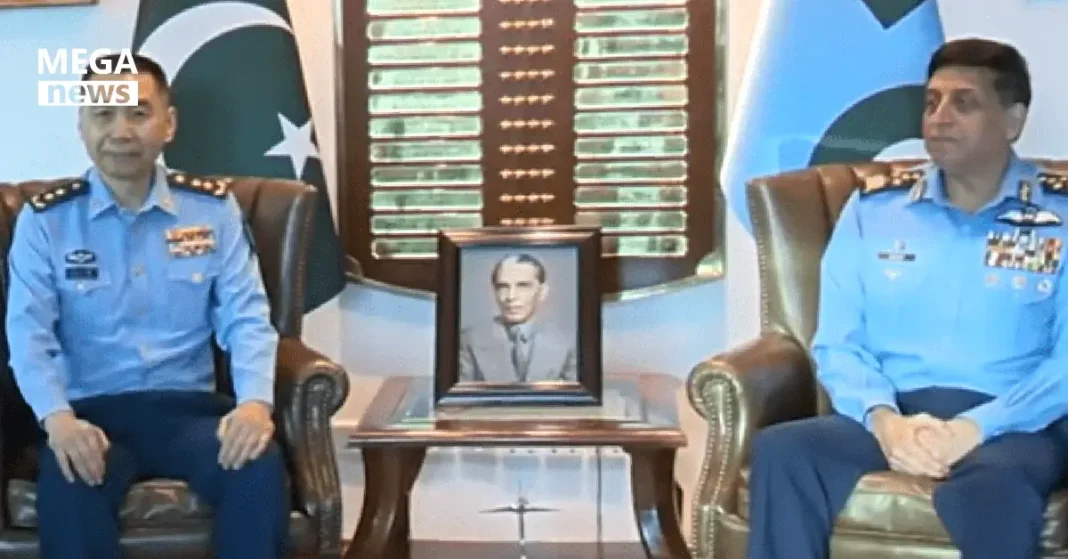
Chinese Air Force chief Lieutenant General Wang Gang has praised the Pakistan Air Force’s exemplary performance during the May 2025 conflict with India, calling it a textbook example of precision and discipline in the face of unprovoked aggression. His comments came during a high-level visit to Islamabad, where he met with Air Chief Marshal Zaheer Ahmed Baber Sidhu at the Air Headquarters. The People’s Liberation Army Air Force (PLA Air Force) delegation was given a comprehensive overview of PAF’s strategic evolution, force structure, and operational doctrine, with the visiting Chinese officials expressing keen interest in the PAF’s multi-domain capabilities.
During the Pakistan-India conflict in May, sparked by Indian air strikes over unproven allegations related to the Pahalgam incident, the PAF responded decisively by downing six Indian jets in retaliatory air combat. The conflict escalated into direct strikes on each other’s airbases until a ceasefire was reached on May 10 through U.S. diplomatic intervention. Lt Gen Wang commended the professionalism and leadership of the Pakistan Air Force, particularly lauding the precision and courage shown by PAF pilots during the crisis. He noted the operational decisions made under the leadership of Air Chief Marshal Sidhu as exemplary and strategic.
Discussions between the two air chiefs focused on regional security dynamics, matters of mutual interest, and strengthening bilateral military cooperation in the air domain. Lt Gen Wang also appreciated PAF’s use of advanced airpower and seamless integration of multi-domain operations, highlighting them as key features of modern warfare. He expressed PLA Air Force’s interest in learning from Pakistan’s battle-tested strategies and operational experiences.
Reports during the conflict had suggested that the PAF deployed Chinese-origin J-10C fighter jets in its defense posture, although Beijing officially denied knowledge of such operational specifics. Meanwhile, India accused China of providing real-time intelligence and support to Pakistan during the conflict. Pakistan’s Chief of Army Staff, Field Marshal Asim Munir, strongly rejected these claims, stating that India’s accusations were a weak attempt to undermine Pakistan’s military competence.
During the meeting, the Chinese delegation was briefed on PAF’s modernization programs, technological advancements, and training modules. Air Chief Marshal Sidhu reiterated the enduring friendship between China and Pakistan, stating that their cooperation is rooted in strategic convergence and mutual respect. He extended a warm welcome to the PLA delegation, underlining PAF’s commitment to strengthening ties through collaboration in training, technology, and joint airpower strategies.
The visit signifies the growing defense collaboration between Pakistan and China, particularly in aviation and modern warfare domains. It also highlights Pakistan’s rising strategic significance in the region, especially in the wake of heightened military tensions in South Asia. The shared vision between the two allies is expected to lead to expanded military interoperability, advanced training exchanges, and further joint initiatives.
READ MORE: India Pakistan Hostilities 2025: Trump Claims Five Jets Were Shot Down Before Ceasefire
This high-profile meeting also comes shortly after Air Chief Marshal Sidhu’s landmark visit to the United States, the first by a serving PAF air chief in over a decade. These back-to-back engagements underline PAF’s growing global outreach and its critical role in shaping regional airpower dynamics.