Islamabad Administration makes the major move for the Hindu community
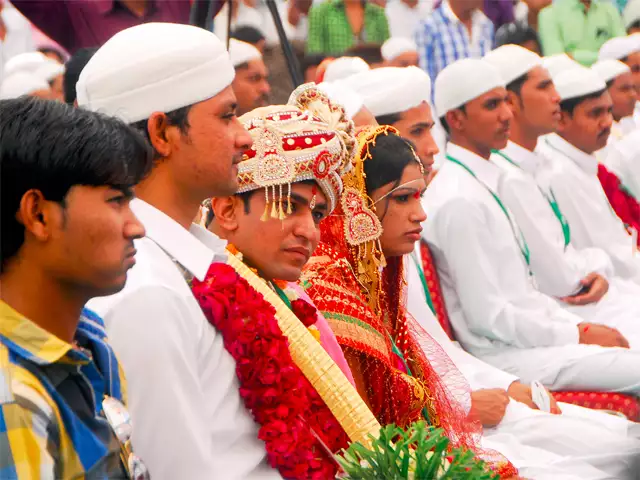
Islamabad: Islamabad administration has finally notified the rules for the Hindu Marriage Act of 2017, allowing members of the Hindu community to solemnize their marriages in accordance with their religious customs.
The notification, titled ‘Islamabad Capital Territory Hindu Marriage Rules 2023’, will pave the way for the implementation of the act, not only in Islamabad but also in Punjab, Khyber Pakhtunkhwa, and Balochistan. The Hindu community has been waiting for more than five years for these rules to be notified and implemented.
According to the rules, union councils in Islamabad will register a ‘Maharaj’ to solemnize Hindu marriages.
In order to be appointed as a ‘Pundit’ or ‘Maharaj’ to solemnize marriages, one must be a Hindu male with sufficient knowledge of Hinduism. However, appointment as a ‘Maharaj’ is subject to obtaining a character certificate from local police and written approval from at least ten members of the Hindu community.
Similar to registered nikah-khawan for Muslims, the union councils will issue “Shaadi Pert” to registered ‘Maharaj’ who will be registered with the respective union councils. All marriages must be registered at the union councils.
The rules state that a ‘Maharaj’ appointed under the marriage act would not take any money for officiating the marriage except for the fees mandated by the government. In case of the demise of a ‘Maharaj’ or cancellation of his license, the marriage record kept by him would be submitted to the relevant union councils, which would be subsequently handed over to his successor.
Section 7 of the rules deals with cases related to the termination of marriages and remarriages.
According to the drafted rules, Hindus residing in Islamabad can seek legal recourse under the West Pakistan Family Courts Act 1964 for resolving marriage disputes. The district attorney for Islamabad Capital Territory, Mehfooz Piracha, described the notification as a significant step towards securing the rights of the minority community.
Hindu community in Islamabad grows significantly over the past decade due to migrations from Sindh, Balochistan, and Khyber Pakhtunkhwa.
Mr. Piracha also stated that Punjab, Balochistan, and KP could adopt these rules, as it is easier for provinces to adopt laws implemented in Islamabad rather than creating new legislation for each jurisdiction.
The implementation of the Hindu Marriage Act in Islamabad is a significant achievement for the community living in the capital. It is worth noting that the Hindu community in Islamabad has grown significantly over the past decade due to migrations from Sindh, Balochistan, and Khyber Pakhtunkhwa owing to security concerns.
The approval of the Hindu Marriage Act and the subsequent notification of the rules is a step towards recognizing the rights of minorities in Pakistan. However, much more needs to be done to ensure the protection and promotion of the rights of minority communities across the country.
Pakistan is home to various religious and ethnic minorities, including Hindus, Christians, Sikhs, and Ahmadis, among others. Unfortunately, these communities face discrimination, persecution, and violence at the hands of the majority population, often with the complicity of the state.
The implementation of the Hindu Marriage Act is just one step towards recognizing the rights of minorities in Pakistan. The government must take further measures to protect and promote the rights of minorities, including their right to worship, their right to participate in public life, and their right to equal treatment under the law.
Read More: LHC allows public interest petitions against section 124-A
Moreover, the state must also take action against those who engage in hate speech, violence, and discrimination against minorities. The government must hold accountable those who target and attack minorities, and ensure that they are brought to justice.