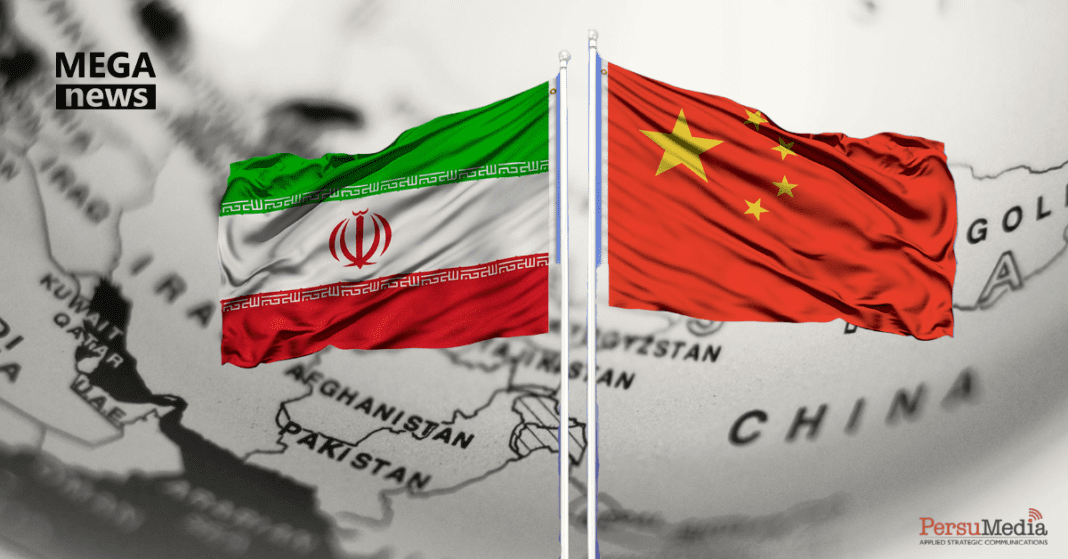
China’s economic interests in Iran run deep and strategic, centered overwhelmingly on energy security, infrastructure, and regional influence. With U.S. sanctions still choking Tehran, Beijing has stepped in to fill a void, but its ambition is tempered by caution.
At the heart lies oil. China imports roughly 43 million barrels monthly from Iran—about 90% of Tehran’s oil exports and nearly 14% of China’s total crude needs. That makes Iran a linchpin in Beijing’s global energy strategy. Projects such as Sinopec’s work on Yadavaran oil field and the Abadan refinery upgrade, alongside a planned €1 billion solar plant from LDK Solar, reflect a clear commitment .
Yet, investment has been tentative. Despite a 2021 25‑year cooperation framework, Chinese direct investment in Iran remains modest. Since 2007, Beijing has pumped just under $5 billion—far less than the sums deployed in the UAE or Saudi Arabia . Chinese contractors, backed by Belt and Road ambitions, have made inroads: railway deals worth $738 million and $525 million, a $150 million tramway in Qazvin, and a stalled $1.5 billion electrified rail project . Ambitious, but often slowed by financing hurdles and geopolitical caution.
Sanctions pressure has fueled Tehran’s reliance on China—especially via so-called “ghost fleet” oil trades and use of yuan transactions, circumventing Western oversight. Still, China hedges. Its teapot refineries in Shandong recently slowed purchases due to market volatility and U.S. threats. Beijing offers an energy lifeline but avoids entanglement.
China’s approach is pragmatic. It loudly defends Iran’s right to peaceful nuclear energy and opposes what it calls “illegal” sanctions. It’s now Tehran’s largest oil customer, often paying in yuan and backing infrastructure trade, yet it avoids provoking U.S. retaliation. A nearby threat—like a possible closure of the Strait of Hormuz—could disrupt up to 20% of global oil flows, directly hitting China’s supply and the wider BRI network.
Moreover, China’s investments in Iran are part of a broader BRI strategy, linking Asia, the Middle East, and Europe. Projects like the Qeshm Island–mainland link, freight rail connections to Xi’an, and Gwadar port in Pakistan all tie back to Iranian stability. A destabilized Iran risks choking these corridors, hurting China’s long‑term connectivity and trade ambitions.
Beyond economics, China seeks regional stability. It has urged de-escalation over the Israel–Iran crisis and used the UN to push for peace, not confrontation. But it’s not stepping in militarily. For Beijing, Iran is an important energy supplier and regional counterweight to U.S. influence, but not a partner worth risking open conflict with Washington.
Ultimately, China’s Iran policy reflects a careful balancing act: it safeguards energy deals and Belt and Road ambitions, resists U.S. pressure by keeping trade semi-shielded, and maintains diplomatic ties—all while sidestepping direct confrontation. In a world where energy and infrastructure are strategic leverage, Iran offers China both rewards and risks. The key will be whether Beijing’s cautious moves can deliver long‑term security without triggering geopolitical backlash.