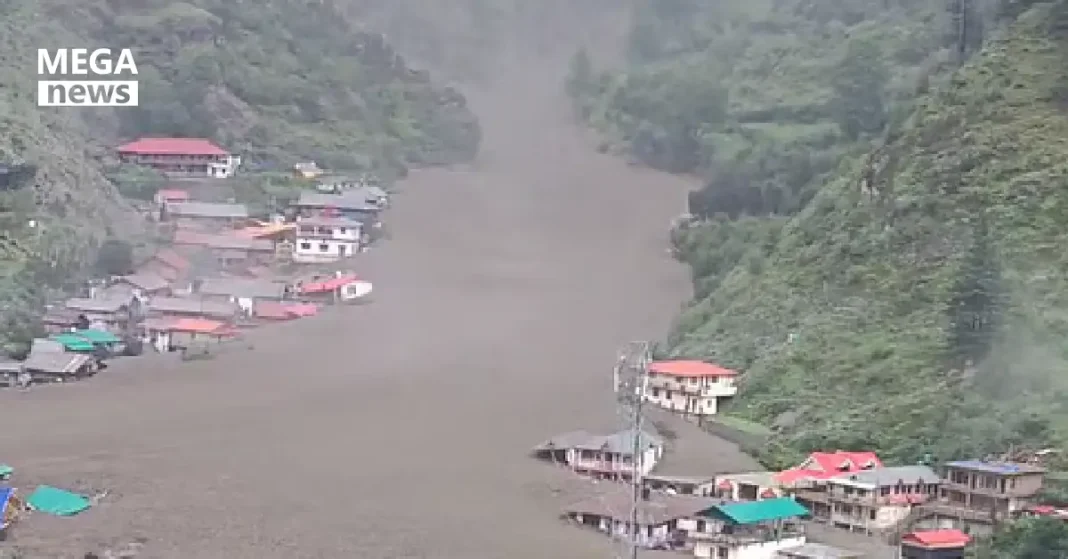
Himalayan flash flood Dharali 2025 devastates Town
At Least 4 Dead A devastating flash flood tore through the serene Himalayan town of Dharali in India’s Uttarakhand state, leaving a trail of destruction that claimed at least four lives. The calamity occurred after a sudden cloudburst triggered a powerful surge of water, carrying debris, mud, and entire buildings down the narrow mountain valley. Rescue efforts were launched on an emergency footing as local and national authorities scrambled to respond to the crisis.
Videos aired on Indian news channels painted a grim picture: a wall of brown water crashing through the town, sweeping away multi-storey buildings and reducing homes to rubble. Entire neighborhoods were engulfed in mud. In some areas, the sludge rose high enough to lap at rooftops, rendering entire structures inaccessible or completely buried.
Uttarakhand Chief Minister Pushkar Singh Dhami described the event as “extremely sad and distressing” and confirmed that rescue operations had been launched “on a war footing.” He reassured the public that he remained in constant contact with emergency management officials and vowed that the situation was under continuous monitoring. His appeal included prayers for the safety of all those still missing or affected.
Local officials confirmed four fatalities, although that number is expected to rise as search operations continue. Fortunately, a fair happening nearby had drawn many locals away from the flood-stricken zone at the time of the disaster, possibly preventing greater loss of life. Still, the extent of the physical damage is staggering.
The Indian Army, known for its swift response in mountainous emergencies, quickly dispatched teams to the affected region. Military statements described the incident as a “massive mudslide” that transformed into a torrent of destruction. Army drone images revealed large swathes of Dharali buried under layers of thick, slow-moving mud.
The India Meteorological Department had issued a red alert just hours before the disaster, forecasting “extremely heavy” rainfall. Reports confirmed that some areas of Uttarakhand received as much as 21 centimeters (eight inches) of rain in a very short period—conditions ripe for landslides and floods in the steep Himalayan terrain.
Natural disasters during India’s monsoon season are common, especially in the hilly northern regions. But scientists and environmental experts are sounding louder warnings about the role of climate change. Flash floods, once rare in many areas, are now increasing in frequency and intensity. Urban expansion, deforestation, and poor land planning further compound the effects of such climate-induced events.
The United Nations’ World Meteorological Organization has previously warned that rising global temperatures are destabilizing the water cycle. More intense floods and more prolonged droughts are no longer isolated incidents—they are becoming signs of a broader environmental shift.
As Uttarakhand mourns the lives lost and residents of Dharali grapple with the trauma of sudden displacement, the disaster serves as yet another reminder of the growing climate vulnerabilities facing South Asia. For many, the road to recovery will be long and difficult—but it also renews urgent calls for climate resilience, better forecasting infrastructure, and sustainable development planning in mountainous regions.
READ MORE:GB Floods 2025: Nine Killed, Hundreds of Homes Destroyed in Gilgit-Baltistan Disaster