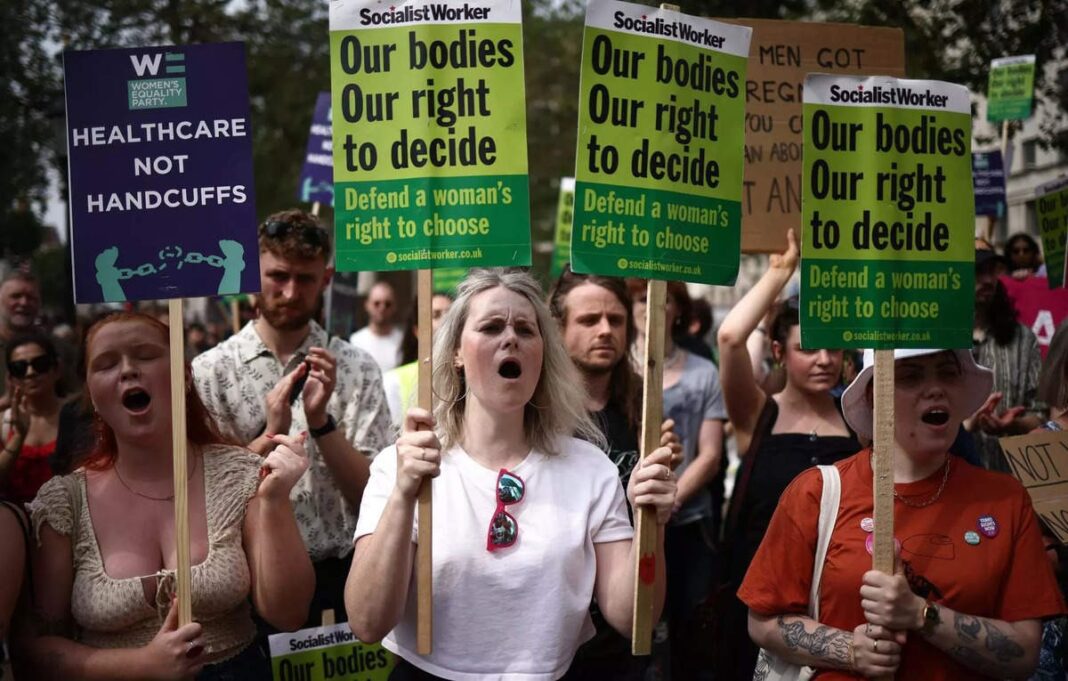
English protesters took to the streets of London on Saturday, demanding an end to the criminalization of abortion. The protest was sparked by the recent case of Carla Foster, a woman who was sentenced to 28 months in jail for undergoing a late abortion. The marchers, carrying signs that read “abortion is healthcare” and “policing our bodies is the real crime,” called for the decriminalization of abortion and the reform of outdated laws.
Carla Foster, a 44-year-old mother of three, admitted to illegally procuring her own abortion when she was between 32 and 34 weeks pregnant. She had deceived an abortion counselor by claiming to be only seven weeks pregnant, well within the legal limit for abortions. Foster’s case has shed light on the inadequacy of current legislation, leading to calls for reform.
Stella Creasy, an opposition Labour Party MP, addressed the protesters and criticized the outdated laws. She argued that the case of Carla Foster demonstrated that the current legislation was no longer “fit for purpose.” Creasy pointed out that in the past ten years, there have been 67 legal prosecutions of women under the 1861 Offences Against the Person Act.
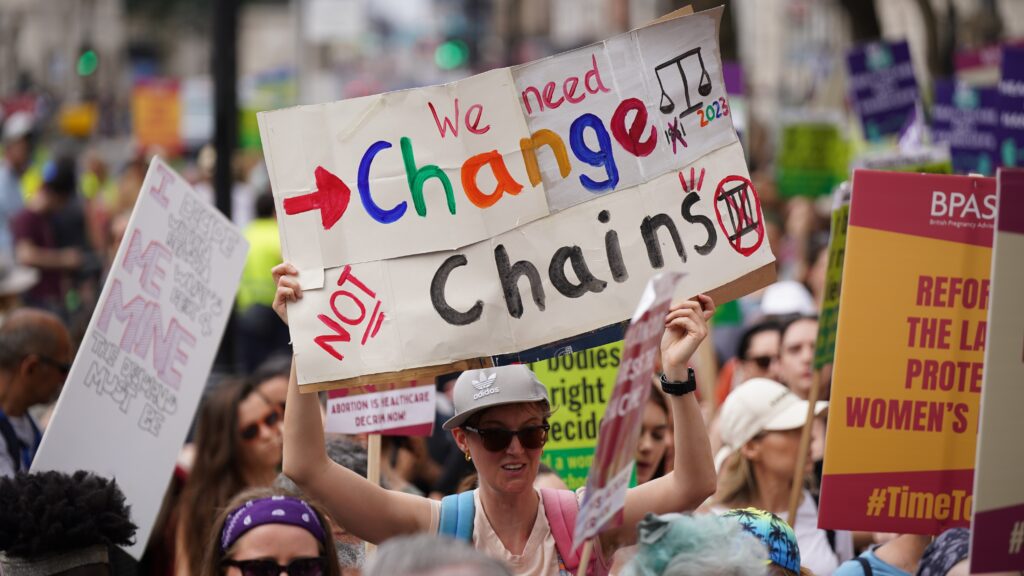
The 162-year-old law banning abortion was amended in 1967, legalizing abortion up to 28 weeks of pregnancy with an authorized provider. However, the gestational limit was later lowered to 24 weeks in 1991. There are very limited circumstances under which abortion is allowed after this point in England, Scotland, and Wales, such as when the mother’s life is at risk or if the child would be born with a severe disability.
Carla Foster’s case highlights the need for a reevaluation of these restrictions. The British Pregnancy Advisory Service (BPAS), a leading provider of abortion services, sent Foster the abortion-causing drugs by mail in May 2020. This was done following a phone consultation due to the pandemic lockdown. After receiving the drugs, Foster gave birth, but unfortunately, the child was pronounced dead after a call to emergency services.
Clare Murphy, the chief executive of BPAS, expressed shock and outrage at the sentence imposed on Carla Foster. She condemned the 19th-century law that was used to prosecute Foster and others, labeling it as the “harshest penalty in the world.” Murphy emphasized the urgent need for parliamentary action and called for the reform of the archaic abortion law.
In recent years, there has been a rise in the number of women and girls facing the trauma of lengthy police investigations and the threat of severe penalties under the existing law. This demonstrates the pressing need to address the issue promptly and comprehensively.
Read more: Cardiology Institute in Pakistan Provides Free Healthcare for Citizens Over 70
The protesters in London have brought attention to the urgent need for reform in the criminalization of abortion. The case of Carla Foster has ignited a national conversation on the limitations and consequences of current laws. The demand for the decriminalization of abortion reflects a growing recognition of reproductive rights as an essential aspect of women’s healthcare. It is now up to lawmakers to listen to the voices of these protesters and take action to ensure that women have the right to make choices about their own bodies without fear of criminal prosecution.