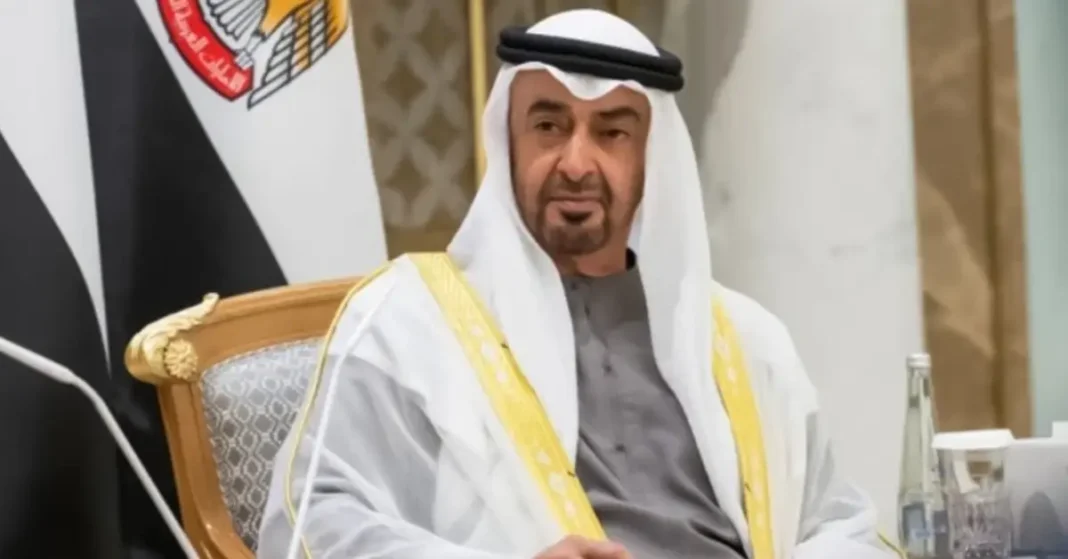
Will Sheikh Mohamed bin Zayed invest in Pakistan?
United Arab Emirates President Sheikh Mohamed bin Zayed Al Nahyan’s visit to Pakistan is being closely watched, not for announcements or pledges, but for what it may signal about future investment decisions.
Unlike traditional diplomatic engagements, Sheikh Mohamed bin Zayed — widely known as MBZ — is not known for investing on promises or public assurances. His approach to diplomacy and capital deployment is rooted in institutional strength, command clarity and long-term stability rather than rhetoric.
Political analysts note that MBZ’s engagements are typically brief but decisive. His focus remains on systems rather than statements, and on outcomes rather than optics. During his interactions in Islamabad, the UAE president is expected to assess whether Pakistan’s governance structure reflects discipline, predictability and the capacity to manage internal and external risks.
At the core of this assessment lies Pakistan’s ability to demonstrate centralised decision-making, enforcement of authority and resilience in the face of political or regional shocks. For MBZ, capital follows order — and disorder is a deterrent.
Security considerations are central to the UAE president’s worldview. Regional flashpoints such as Gaza, the Red Sea, Yemen and the broader Iran-Israel tensions shape his strategic calculations. Within this context, Pakistan’s role under the current military and political leadership is being evaluated for reliability and quiet delivery rather than ideological positioning.
Observers say MBZ’s engagement with Pakistan’s leadership, including Field Marshal Asim Munir, is likely to revolve around internal stability, command cohesion and Pakistan’s approach to regional risk management.
The key question — whether Sheikh Mohamed bin Zayed will invest in Pakistan — hinges not on diplomatic warmth but on confidence in the system. His visit is seen less as a gesture of friendship and more as a test of functionality and governance.
MBZ is known to avoid sentimental investments. Instead, he channels capital into sectors that reinforce state strength and supply-chain security. These typically include energy, ports and logistics, critical minerals, and defence-related industrial ecosystems.
If Pakistan is perceived as predictable, disciplined and governable, analysts believe the UAE could commit significant investment. However, hesitation or uncertainty would likely result in delay — and in global finance, delay itself is often interpreted as a verdict.
Ultimately, Sheikh Mohamed bin Zayed’s investment decisions are guided by structure, not sentiment. His capital follows order, and order, in his calculus, follows command.