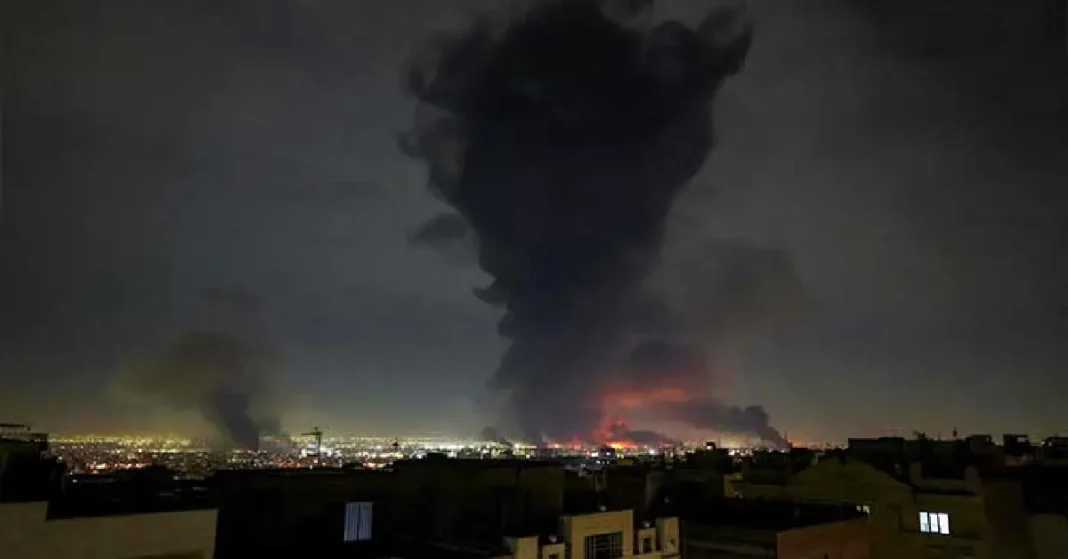
The World Health Organization (WHO) has warned of serious health risks linked to “black rain” reported in parts of Iran following airstrikes on oil facilities, urging residents to remain indoors as toxic pollutants spread through the air.
Toxic Rain After Oil Facility Fires
According to the UN health agency, multiple reports have emerged of oil-laden rain falling in recent days, particularly in the capital Tehran, where thick black smoke filled the sky after an oil refinery was struck during the escalating conflict involving United States and Israel.
WHO spokesperson Christian Lindmeier said the phenomenon poses a serious health threat.
“The black rain and the acidic rain coming with it is indeed a danger for the population, mainly affecting respiratory health,” Lindmeier told a briefing in Geneva.
Dangerous Chemicals Released
Health experts said the strikes on oil storage facilities and refineries have triggered fires that released large amounts of toxic substances into the atmosphere, including:
- Hydrocarbons
- Sulfur oxides
- Nitrogen compounds
These pollutants can combine with rainwater, producing dark, contaminated rainfall often described as ‘black rain’.
Potential Health Effects
Scientists warn that inhaling smoke particles or touching contaminated residue may lead to:
- Breathing difficulties
- Headaches
- Skin and eye irritation
- Respiratory complications
Long-term exposure to certain toxic compounds may also increase the risk of cancer, experts added.
WHO Supports Indoor Advisory
Iranian authorities have already advised residents to stay indoors and avoid exposure to polluted air, a recommendation supported by the WHO given the current environmental conditions.
Lindmeier said the strikes had caused serious air quality concerns, making indoor shelter one of the safest precautions for residents.
Weather Conditions Behind ‘Black Rain’
Scientists say the phenomenon occurs when rainfall mixes with soot and chemical particles released from burning oil facilities.
Akshay Deoras, a research scientist at the University of Reading, said weather patterns helped spread polluted particles through the atmosphere before rain carried them back to the ground.
He noted that while the black rain shocked residents, prolonged exposure to toxic air pollution may pose a greater health risk.
Air Quality May Improve
Experts believe the air quality could gradually improve if no new strikes occur and weather conditions remain dry later in the week.
However, scientists warn that fresh attacks on oil infrastructure could release additional pollutants, prolonging the environmental and health risks for people living in affected areas.