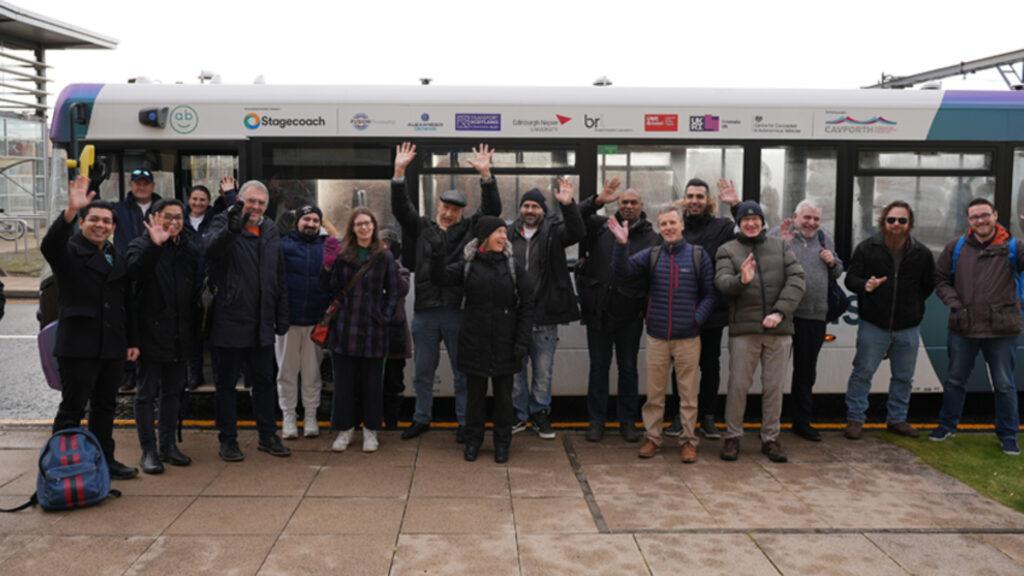
Scotland is set to launch the world’s first self-driving public bus fleet, with five autonomous buses scheduled to begin operation next month. The groundbreaking initiative, named CAVForth, is being overseen by Stagecoach, the UK’s biggest transport and mentor administrator, and is set to revolutionize public transportation in Scotland.
The first route that the autonomous buses will take is a 22.5-kilometer loop that crosses the Forth Road Bridge, one of Scotland’s most famous landmarks. The buses will be equipped with sensors that allow them to navigate pre-selected streets at speeds of up to 80 kilometers per hour. Operating at AV Level 4, which means that they will have a safety driver who has been trained, but the driver will not be expected to touch the controls while the vehicle is in autonomous mode.
The concept of driverless buses is not entirely new, as similar initiatives are being planned for other cities in the UK, such as Sunderland and Belfast. However, the launch of the CAVForth fleet in Scotland marks a significant milestone in the development of autonomous transportation in the country.
The CAVForth project is part of a larger European initiative called ULTIMO, which has a budget of over €55 million and aims to test autonomous public transportation services in three European cities: Geneva in Switzerland, Kronach in Germany, and Oslo in Norway. This makes it the largest self-driving car project in Europe, and Scotland’s involvement in the project is a testament to its commitment to being at the forefront of technological innovation in the transportation sector.
The introduction of self-driving buses has the potential to bring about a myriad of benefits to the public transportation system in Scotland. One of the key advantages is increased safety. According to data from the World Health Organization, road traffic accidents are a leading cause of death and injury worldwide, and autonomous vehicles have the potential to significantly reduce the number of accidents caused by human error. With their advanced sensors and ability to communicate with each other, self-driving buses can navigate traffic and road conditions with precision, reducing the risk of collisions.
In addition to safety, self-driving buses also have the potential to improve the efficiency and sustainability of public transportation. Autonomous buses can optimize routes and schedules based on real-time data, reducing congestion and improving the overall flow of traffic. This can result in reduced fuel consumption, lower emissions, and a more environmentally-friendly mode of transportation.
Furthermore, self-driving buses can also increase accessibility and convenience for passengers. With their ability to operate at predetermined speeds and routes, autonomous buses can provide reliable and on-time services, reducing waiting times and improving the overall passenger experience. This can be particularly beneficial for elderly or disabled passengers who may face mobility challenges and rely heavily on public transportation for their mobility needs.
Despite the numerous benefits, there are also concerns and challenges associated with the introduction of self-driving buses. One of the main concerns is the potential loss of jobs for bus drivers. As autonomous technology becomes more widespread, there is a possibility that traditional bus driver roles may be replaced by automated systems. However, proponents of self-driving buses argue that the technology has the potential to create new job opportunities, particularly in the areas of maintenance, software development, and data analysis.
Another challenge is the issue of public acceptance and trust in autonomous vehicles. While self-driving technology has advanced significantly in recent years, there are still concerns about safety, reliability, and data privacy. Building public trust in autonomous buses will be crucial for their successful integration into the public transportation system. This will require robust safety regulations, thorough testing, and transparent communication about the benefits and risks of autonomous technology.
Related posts: Emirates Cabin Crew Jobs: Global Hiring Drive with $4000 Starting Salary
Scotland’s launch of the world’s first self-driving public bus fleet marks a significant step towards the future of transportation. The CAVForth project, overseen by Stagecoach, represents a bold initiative to embrace cutting-edge autonomous technology in the public transportation sector. With a fleet of five self-driving buses set to operate on a 22.5-kilometer loop that crosses the iconic Forth Road Bridge, Scotland is at the forefront of the global push towards autonomous transportation.