Pakistan Scores Key Legal Victory Against India in Indus Waters Treaty Dispute
Pakistan has secured a significant procedural victory against India in the long-running Indus Waters Treaty (IWT) dispute, as the Permanent Court of Arbitration (PCA) in The Hague ordered New Delhi to submit detailed operational records of its hydropower projects built on rivers allocated to Pakistan under the 1960 treaty.
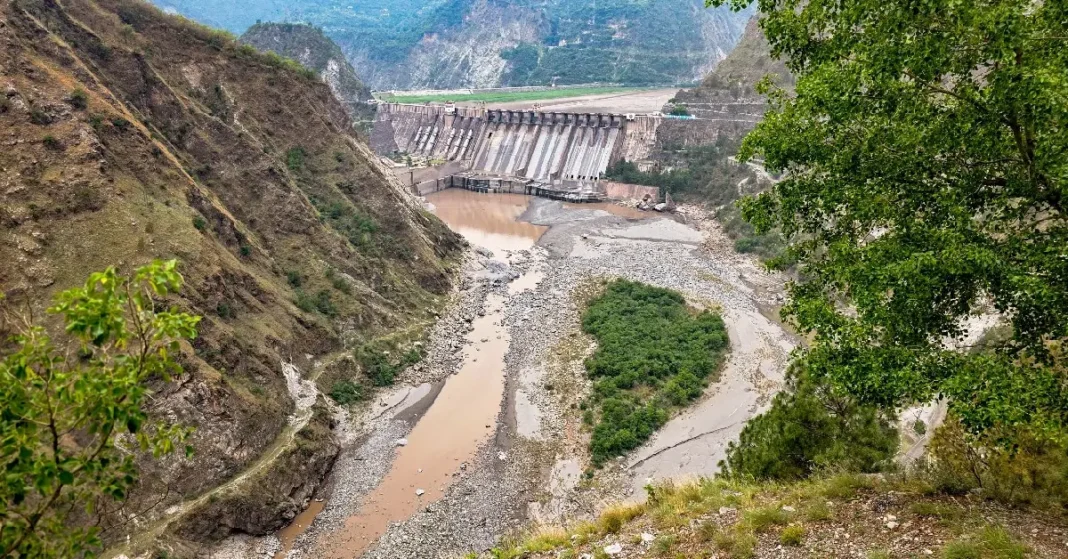
According to details reported from The Hague, the tribunal has directed India to provide complete operational logbooks of the Baglihar and Kishanganga hydropower projects by February 9. The court further ruled that if India fails to comply with the order, it will be required to formally justify its refusal before the tribunal. The directive is being viewed in Islamabad as a major legal breakthrough, strengthening Pakistan’s position in the case.
Under the same order, Pakistan has been asked to clarify by February 2 the specific documents it is seeking from India. The second phase of hearings on the merits of the case is scheduled to take place on February 2 and 3 in The Hague. Importantly, the tribunal made it clear that the proceedings will continue irrespective of India’s participation, a point that carries particular weight given New Delhi’s earlier decision to disengage from parts of the legal process.
A high-level Pakistani delegation, led by the Attorney General, is set to represent the country before the tribunal. Pakistan maintains that India has violated the hydropower provisions of the Indus Waters Treaty by illegally storing water and manipulating flows through its dams on the western rivers, which are reserved for Pakistan. Islamabad argues that the operational logbooks are critical evidence to substantiate claims of water withholding and treaty violations.
In its observations, the tribunal underlined that only the Court of Arbitration has the authority to permit any additional water storage under the treaty framework. It clarified that neutral experts do not have the power to authorize interim or unilateral actions related to water storage. The court also emphasized that operational records of dams located in Indian-administered Kashmir are vital for a fair and lawful resolution of the dispute.
The latest order follows earlier developments in the case. On November 12, 2025, Pakistan announced that it would continue to participate in the Neutral Expert proceedings under the Indus Waters Treaty despite India’s decision to stay away. In a statement issued at the time, the Foreign Office confirmed that Pakistan would engage fully and in good faith with all dispute-resolution mechanisms provided under the treaty.
According to the Foreign Office, the Court of Arbitration had issued important clarifications on November 10, 2025, in response to Pakistan’s request regarding the interpretation of the treaty. The court affirmed that its jurisdiction extends beyond the issue of “freeboard” and covers all components of run-of-river hydroelectric projects that India may construct on the western rivers. It also stressed that any design enabling artificial raising of water levels above the Full Pondage Level specified in approved designs is prohibited under the treaty.
Pakistan welcomed these clarifications, noting that they reinforced earlier findings published by the court on August 8, 2025, regarding the general interpretation of the Indus Waters Treaty. The Foreign Office also acknowledged the accompanying procedural order, which confirmed that the arbitration would continue in a phased manner while taking into account the parallel Neutral Expert proceedings initiated by India under Article IX and Annexure F of the treaty.
The Neutral Expert proceedings, requested by India, are scheduled to enter their next phase in Vienna from November 17 to 21, 2025. Despite India’s decision to halt its participation, Pakistan has reiterated that India’s absence does not prevent the proceedings from moving forward, a position that has also been upheld by the Neutral Expert.
Legal experts say the latest order by the Permanent Court of Arbitration significantly bolsters Pakistan’s case by compelling transparency from India regarding dam operations. As the hearings continue, the directive is expected to play a central role in determining whether India has breached the Indus Waters Treaty, a cornerstone agreement governing water sharing between the two nuclear-armed neighbours for more than six decades.