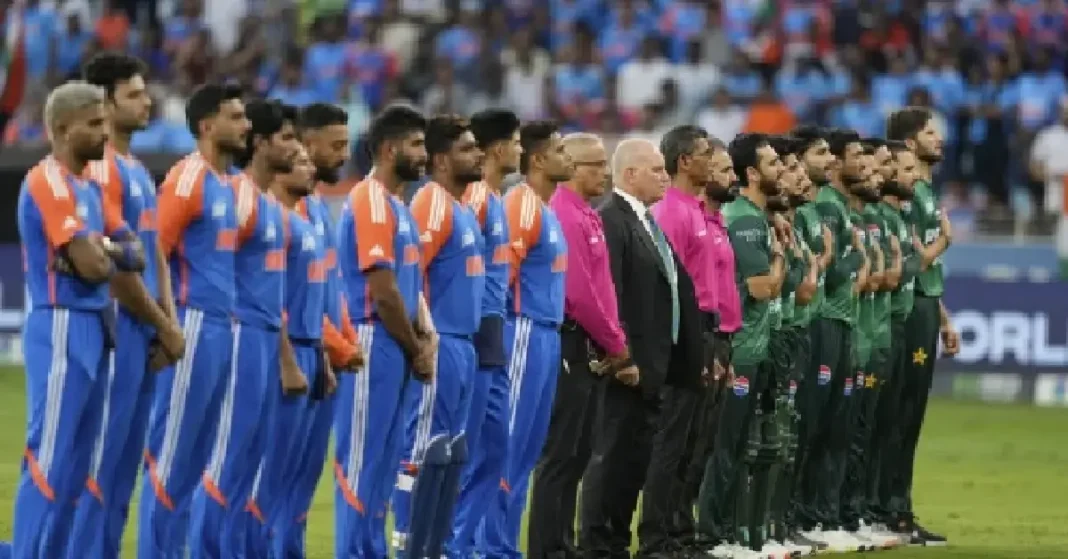
The decision by Pakistan to not play against India in the T20 World Cup has triggered a major financial shock across India and the global cricketing landscape, with analysts warning of significant revenue losses tied to the absence of the sport’s most lucrative fixture.
In modern cricket, few matches rival the commercial and emotional weight of a Pakistan–India clash, particularly in a T20 World Cup. The fixture is widely regarded as the tournament’s centerpiece, often generating more revenue than multiple matches combined.
India’s strong reaction to Pakistan’s announcement is being linked to the match’s estimated commercial value of nearly $500 million (around Rs140 billion). This figure includes income from broadcasting rights, advertising premiums, sponsorship deals, ticket sales, and even regulated betting revenues.
Industry experts say a Pakistan–India encounter injects momentum into the entire tournament. Broadcasters pay premium prices for media rights largely because of this single match, while the International Cricket Council (ICC) relies on the revenue stream to financially support cricket boards that lack strong commercial markets.
For broadcasters, the match is considered a golden goose. Advertising rates during a Pakistan–India game reach extraordinary levels, with a 10-second commercial costing between 2.5 and 4 million Indian rupees, equivalent to approximately Rs7.6 million to Rs12.2 million in Pakistani currency. In contrast, matches involving India against other major teams attract significantly lower advertising rates.
The absence of this high-profile fixture could fundamentally alter the tournament’s financial structure. Indian media reports suggest that the immediate financial hit will be borne by broadcast rights holders, with advertising revenue alone from a Pakistan–India match estimated at around 3 billion Indian rupees (approximately Rs9.2 billion).
In such scenarios, broadcasters typically seek compensation from the ICC, a move that could reduce payouts not only to Pakistan and India but also create serious challenges for the governing body in meeting its financial commitments to other full and associate member boards.
Cricket analysts warn that beyond political and sporting implications, the standoff highlights how deeply global cricket’s economy is tied to the Pakistan–India rivalry — and how its absence could reshape revenue models for future ICC events.