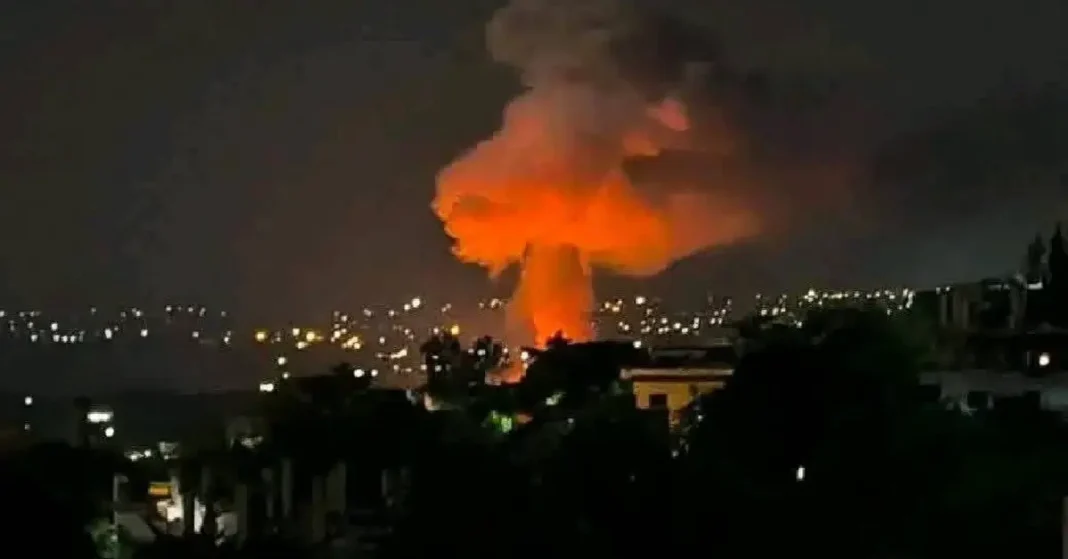
Tensions between Pakistan and Afghanistan have escalated sharply after Pakistan’s Defence Minister Khawaja Asif declared an “open war” with Afghanistan’s Taliban-led government, following reported air strikes on Kabul and intensified cross-border fighting.
Explosions were reported in Kabul, as well as in Kandahar and Paktia province, with AFP journalists and local media confirming blasts and aircraft activity overhead. Pakistan said it launched air assaults targeting what it described as Taliban military infrastructure.
Earlier, Taliban government spokesperson Zabihullah Mujahid claimed Afghanistan had initiated “large-scale offensive operations” against Pakistani military positions along the Durand Line, the disputed 2,640-kilometre border separating the two countries.
Conflicting casualty claims
Both sides have issued sharply differing accounts of casualties.
Pakistan’s Information Minister Attaullah Tarar stated that 133 Afghan Taliban fighters were killed and more than 200 wounded in the fighting. He also claimed that dozens of Taliban posts had been destroyed.
In contrast, the Taliban authorities said eight of their fighters were killed and 11 wounded, while alleging that 55 Pakistani soldiers had been killed and multiple military posts seized. Pakistan confirmed the deaths of two of its security personnel in the clashes.
These figures have not been independently verified.
Air strikes follow deadly attacks inside Pakistan
According to Pakistani officials, the latest military action follows a series of deadly attacks inside Pakistan in recent weeks. Islamabad has accused Afghan soil of being used by armed groups, particularly the Tehreek-e-Taliban Pakistan (TTP), to launch cross-border attacks.
Pakistan says it had repeatedly urged Kabul to take action against such groups. Afghan authorities have denied providing safe havens to militants and accused Pakistan of spreading misinformation.
Prime Minister Shehbaz Sharif said Pakistan had “always sought peace” but warned that the country’s armed forces would firmly confront any aggression. He added that Pakistan’s sovereignty and territorial integrity would be defended at all costs.
Meanwhile, former Afghan President Hamid Karzai condemned the air strikes and said Afghans would defend their homeland with unity and courage.
International calls for restraint
The escalation has drawn global concern. UN Secretary-General Antonio Guterres urged both sides to de-escalate and adhere to international law, particularly international humanitarian law.
Iran’s Foreign Minister Abbas Araghchi called on both countries to resolve their differences through dialogue and good neighbourly relations, offering Tehran’s support for mediation. Russia also urged an immediate halt to cross-border attacks and expressed readiness to facilitate diplomatic engagement if requested.
Strategic imbalance
Military comparisons underscore the asymmetry between the two neighbours. Pakistan maintains approximately 660,000 troops, operates hundreds of combat aircraft, and is a nuclear-armed state with an estimated 170 warheads. Afghanistan, by contrast, lacks fighter jets and relies largely on ageing equipment.
Analysts warn that continued tit-for-tat strikes risk spiralling into a broader conflict, particularly given the mountainous terrain and complex ethnic and tribal ties along the Durand Line.
With both sides claiming heavy losses and air operations reportedly ongoing, the situation remains fluid and volatile. Observers say the coming hours will be critical in determining whether the confrontation subsides through diplomatic channels or escalates into a prolonged military standoff between the two neighbours.