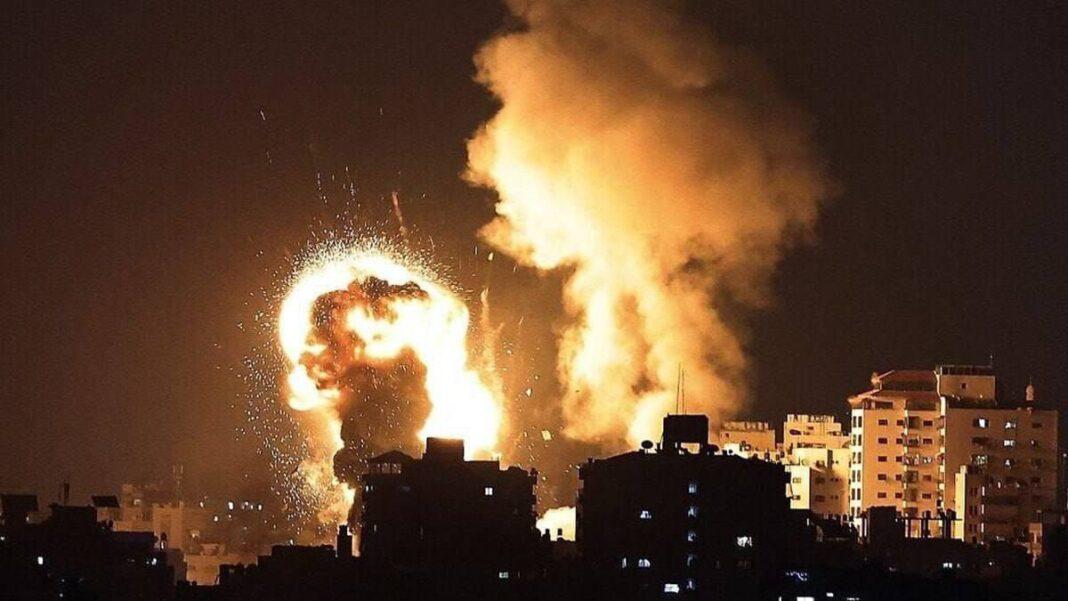
Late Thursday, Israel began airstrikes on the Gaza Strip in response to a barrage of cross-border rockets fired from Lebanon, which the Israeli government blamed on Palestinian organizations. The airstrikes targeted various Hamas training facilities, according to a Palestinian security source.
The situation escalated quickly, with Prime Minister Benjamin Netanyahu vowing that Israel’s adversaries would “pay the price” after 34 rockets were launched into its territory from Lebanon earlier in the day. As the conflict intensifies, the international community is calling for calm and urging both sides to refrain from further violence.
In this article, we will explore the latest developments in the ongoing conflict between Israel and Palestine, including the current situation in Gaza and the impact of the airstrikes.
The roots of the conflict
The conflict between Israel and Palestine dates back to the early 20th century when Jewish immigrants began settling in Palestine, then under Ottoman rule. The conflict has been marked by violence, wars, and political negotiations, with little progress towards a long-term peace agreement.
The current escalation of violence can be traced back to April 2021, when tensions rose in Jerusalem over the planned eviction of Palestinian families from the Sheikh Jarrah neighborhood. The situation deteriorated quickly, with clashes between Israeli police and Palestinian protesters escalating into violence.
The latest wave of violence began on Wednesday, when rockets were fired from the Gaza Strip into southern Israel.It responded with airstrikes on Hamas targets in Gaza, and the situation has continued to escalate since then.
The impact of the airstrikes
The airstrikes on the Gaza Strip have caused significant damage to Hamas training facilities and other targets, according to reports from the ground. The strikes have also caused civilian casualties, with at least one person reported injured.
The situation in Gaza is precarious, with reports of residents fleeing their homes and seeking shelter from the violence. The UN has expressed concern about the impact of the airstrikes on civilian populations and has called for an immediate de-escalation of the conflict.
The International response
The international community has called for calm and urged both sides to exercise restraint and avoid further violence. The US State Department issued a statement condemning the rocket attacks from Lebanon and expressing support for Israel’s right to defend itself. The statement also called for an immediate de-escalation of the situation.
The EU has also called for an immediate end to the violence and for both sides to engage in dialogue to resolve the underlying issues. The UN Security Council held an emergency meeting on the situation on Friday, with members expressing concern about the escalating violence and the impact on civilians.
The conflict between Israel and Palestine is complex and deeply rooted in history and politics. The current escalation of violence is just the latest chapter in a long and bloody conflict. As the international community calls for calm and urges both sides to exercise restraint, it remains to be seen how the situation will evolve in the coming days and weeks.
In the meantime, the impact of the airstrikes on Gaza and the ongoing rocket attacks from Lebanon highlight the urgent need for a long-term solution to the conflict that addresses the underlying issues and provides a path towards peace and stability in the region.
The Conflict Today: Recent Developments
The current wave of violence in the region can be traced back to April 2021, when tensions in Jerusalem rose over the planned eviction of Palestinian families from the Sheikh Jarrah neighborhood. This led to clashes between Israeli police and Palestinian protesters, which quickly escalated into violence.
In May, Hamas and other Palestinian militant groups in Gaza began firing rockets into it, prompting an Israeli military response. The situation has continued to escalate since then, with both sides exchanging fire and causing significant damage and loss of life.
Similar article: UNSC convenes emergency meeting to address Israeli aggression at Al-Aqsa Mosque
The Current Situation in Gaza
The Gaza Strip is a small territory on the Mediterranean coast that has been under its blockade since 2007, when Hamas took control of the area. The blockade has severely restricted the movement of people and goods in and out of Gaza, leading to widespread poverty and unemployment.
The current airstrikes on Gaza have caused significant damage to Hamas targets and other infrastructure in the area. However, they have also caused civilian casualties, including children and other vulnerable groups.