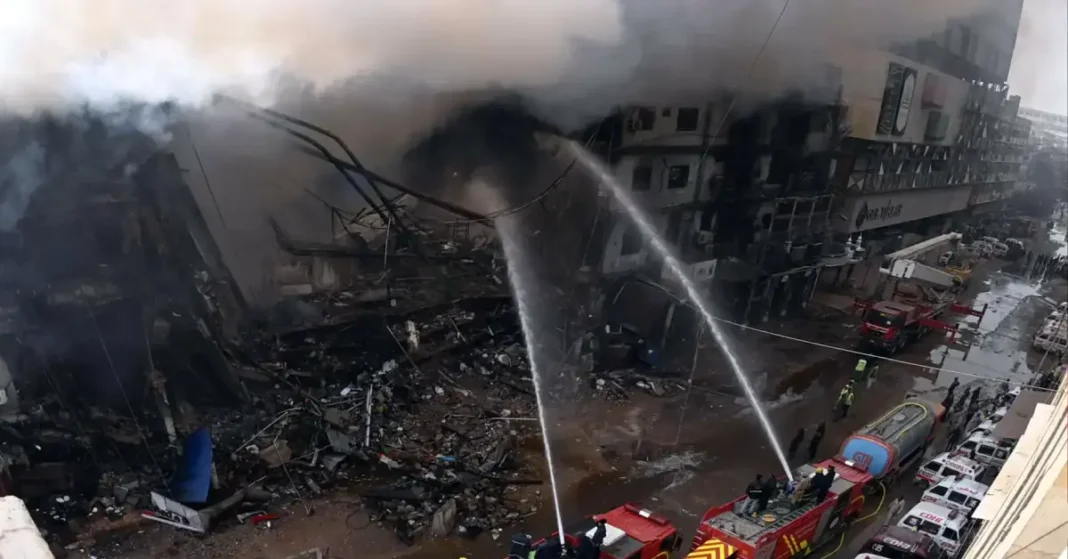
KARACHI: The death toll from the devastating Gul Plaza fire has climbed to 26, while the number of missing persons has surged to 83, as authorities begin DNA collection for victim identification amid ongoing rescue and recovery operations at the fire-ravaged commercial complex on M.A. Jinnah Road.
According to officials, the massive blaze, which erupted on January 17 at around 10:00 pm, was brought under control after a grueling 34-hour firefighting operation, but the building remains structurally unsafe, delaying full-scale recovery efforts. Rescue teams, including Rescue 1122, Karachi Fire Brigade, Pakistan Army, Rangers, and Frontier Works Organisation (FWO), continue cautiously searching the damaged structure amid fears of further collapse.
Authorities confirmed that 26 bodies have so far been recovered, with only a handful identified. The remaining victims will be identified through DNA testing, as several bodies were charred beyond recognition. Officials said DNA samples have already been collected from relatives of at least 18 missing persons, while more families continue to approach the missing persons desk established at the Deputy Commissioner South office.
The tragedy has sent shockwaves across Karachi, particularly among families desperately searching for loved ones who were reportedly trapped inside the plaza when the fire broke out late at night. Many victims were shop workers who had stayed back to secure merchandise, while others were visitors and traders preparing to leave when thick smoke engulfed the building.
Survivors have provided harrowing accounts of the chaos inside Gul Plaza, revealing serious safety lapses. According to eyewitnesses, 24 out of 26 gates were locked after 10 pm, leaving only two exits functional. Dense smoke, darkness and overcrowded internal pathways reportedly turned the building into a death trap, preventing dozens from escaping in time.
Rescue officials said teams are entering the plaza through rear access points, using heavy machinery to clear debris and create safe corridors. Engineers are simultaneously assessing the structural integrity of the building before allowing deeper entry, as portions of the plaza have already collapsed.
Authorities also confirmed that three teenage boys from Lyari, aged between 13 and 16, remain missing. Their families have been camping near the site, appealing for expedited rescue efforts. Scenes of grief were witnessed as relatives broke down while submitting DNA samples, clinging to hope for closure.
Sindh Police stated that all entry points around Gul Plaza and the adjacent Rampa Plaza have been sealed, and only authorized rescue personnel are allowed inside. The DIG South confirmed that the situation is under control, but the recovery phase could take time due to safety concerns and extensive damage.
Meanwhile, the Sindh Building Control Authority (SBCA) has revealed alarming details about the structure of Gul Plaza. Official records show the building was originally approved for four floors and 1,021 shops, but in reality, 1,200 shops were constructed, including illegal encroachments along internal corridors and near exits. Authorities said these unauthorized alterations significantly obstructed emergency access and evacuation routes.
The Sindh government has announced Rs10 million compensation for the families of each deceased victim. Chief Minister Syed Murad Ali Shah stated that disbursement would begin immediately, adding that relief measures are also being planned for traders who suffered massive financial losses in the inferno.
Karachi Mayor Murtaza Wahab, during his visit to the site, faced anger from traders and victims’ families, who accused authorities of delayed response and poor safety enforcement. The mayor announced the formation of a committee comprising traders and government officials to assess damages and oversee compensation. He also confirmed that the Nazimabad Fire Station will be renamed in honour of firefighter Furqan, who was martyred during rescue operations, while his widow will be offered employment and his children’s education expenses covered.
The fire department described the incident as one of the worst commercial fires in Karachi’s history, affecting over 1,500 shops spread across 1.75 acres. Officials said the blaze may have been triggered by an electrical short circuit or power surge, though investigations are still underway.
As recovery operations continue, authorities have urged families of missing persons to stay in contact with official helplines and avoid obstructing rescue efforts. Tensions briefly escalated when grieving relatives blocked cranes from removing debris, fearing bodies might be crushed, prompting intervention by law enforcement to resume operations.
The Gul Plaza fire has once again raised serious questions about building safety regulations, emergency preparedness, and enforcement failures in Karachi’s commercial centres. With dozens still unaccounted for, the tragedy remains an unfolding humanitarian crisis, leaving families, traders and the city at large searching for answers, accountability and justice.