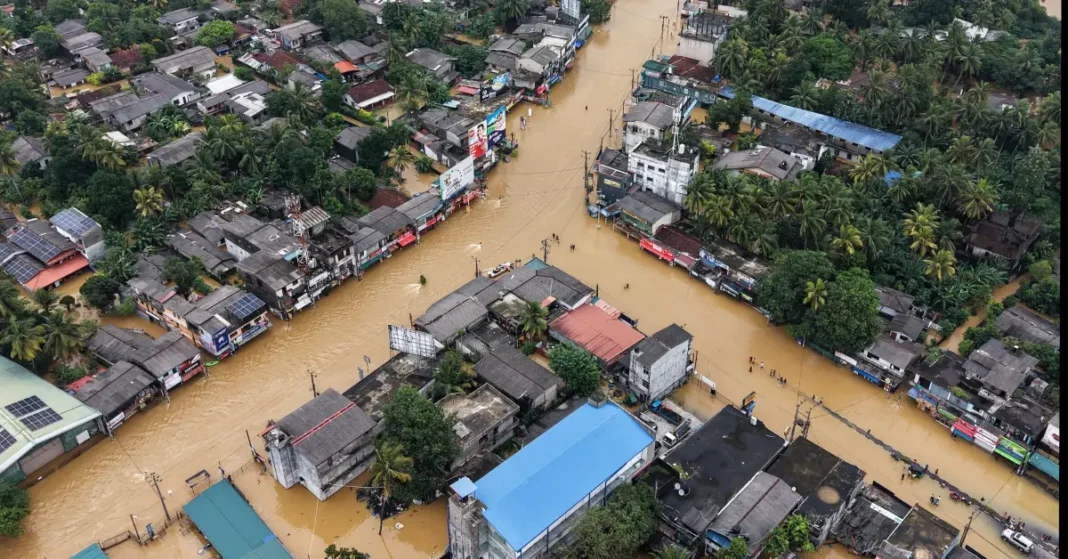
Floods in Indonesia Sri Lanka and Thailand
Severe Floods in Indonesia Sri Lanka and Thailand have left more than 1,100 people dead as authorities struggle to reach devastated regions cut off by landslides, collapsed roads, and continuous rain. Officials across the three nations confirmed that the combined death toll has risen sharply, with hundreds still unaccounted for, and emergency shelters filling rapidly as communities flee to safer ground. The scale of destruction has prompted regional governments to accelerate rescue operations while millions brace for more unpredictable weather linked to changing climate patterns.
In Indonesia, the crisis deepened across North Sumatra, West Sumatra, and Aceh, where entire villages remain submerged and rescue teams face enormous challenges accessing remote areas. Authorities confirmed 604 deaths, with at least 464 residents still missing, while nearly 300,700 people have been forced into temporary shelters. During a visit to the worst-hit regions, President Prabowo Subianto pledged to rebuild damaged infrastructure and ensure uninterrupted aid delivery to isolated communities. He noted that many areas remain reachable only by air, with helicopters delivering food, medical supplies, and communication equipment. “We need to confront climate change effectively,” the president said, calling on provincial administrations to take a proactive role in protecting vulnerable regions and preparing for future extreme weather events.
Across the southern provinces of Thailand, authorities reported 176 deaths as government agencies ramped up relief efforts and began distributing financial assistance to families affected by one of the country’s worst flooding episodes in recent years. Compensation payments totaling 239 million baht have already begun reaching more than 26,000 residents. Emergency workers are now focused on restoring electricity and water services in areas where infrastructure has been severely damaged. Nearly 3.9 million people have been affected by the floods, forcing thousands to leave their homes while crews continue clearing debris and reopening key transportation routes.
Sri Lanka has also been hit hard, particularly in the central hill country—an area known for its tea plantations but now marked by collapsed slopes and destroyed settlements. Officials confirmed 366 deaths and 367 people missing, with nearly 218,000 residents currently housed in temporary shelters. Rescuers are actively searching for survivors trapped under landslides triggered by days of relentless rainfall. Many families have reported missing loved ones with little hope of recovery as conditions continue to hamper search operations.
Humanitarian organizations across the region warn that the combined impact of the floods could worsen in the coming days, with weather agencies forecasting additional rain. Emergency teams in all three countries are trying to expand relief operations, but the scale of the damage—especially to transport networks—remains a major obstacle. Local volunteers, international aid groups, and military units are collaborating to deliver essential supplies, while health authorities caution that waterborne diseases could emerge as floodwaters stagnate.
Governments across Southeast Asia are now under growing pressure to improve disaster-preparedness amid rising concerns over climate-induced extreme weather. The devastation has also renewed debate over land mismanagement, deforestation, and lack of early-warning systems in rural districts. As displaced families continue to seek shelter, many communities worry that rebuilding will take months, if not years, and that the environmental impact of the floods will linger long after the waters recede.
For international updates and continuing coverage, visit our World News on MegaNews.