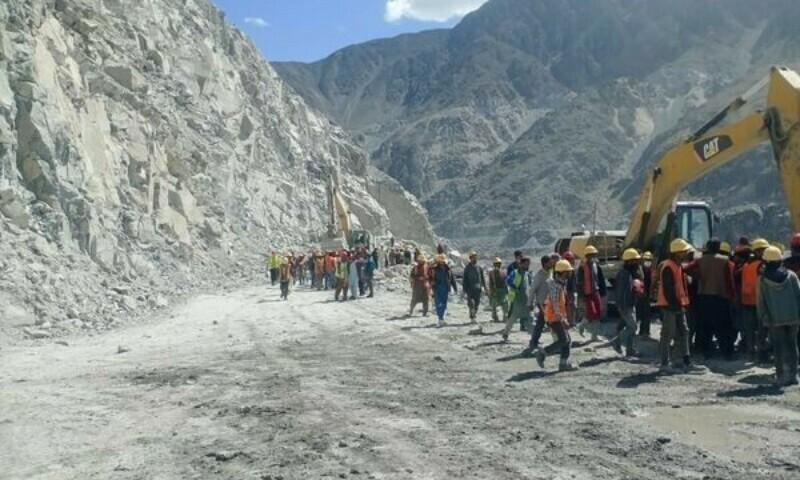
A massive explosion rocked the site of the under-construction Diamer Bhasha dam in Gilgit Baltistan, Pakistan on Friday, causing widespread devastation and loss of life. The incident occurred during rock blasting, a routine operation necessary for the construction of Diamer Bhasha dam. As per police reports, at least three people lost their lives, and seven others were injured in the blast.
The construction of the Diamer Bhasha dam is a high-profile project, with significant implications for Pakistan’s economy and the region’s population. The dam’s construction is being financed by the Chinese government, with international investment and support. The project aims to generate hydroelectric power and provide irrigation water to the region, helping to boost the country’s economic growth.
Initial tally of injured and deceased in Diamer Bhasha dam rock blasting
The blast at the Diamer Bhasha dam site has sent shockwaves throughout the region, with the authorities racing to respond to the emergency. The initial tally of injured and deceased varied among different sources, with some confusion and conflicting reports.
According to the Diamer Rescue 1122 District Coordinator Shaukat Riaz and the dam project’s spokesperson Pyar Ali, three people died, and ten were injured in the incident. However, Diamer Senior Superintendent of Police (SSP) Muhammad Ayaz reported that initially, ten labourers were injured, of whom three later died.
In a statement, the Water and Power Development Authority (Wapda) verified that there were three fatalities and ten injuries. Although the exact cause of the explosion is yet to be determined, the authorities are investigating the incident to identify the factors contributing to the tragedy.
Chinese engineers unharmed
None of the Chinese engineers working at the site were harmed in the blast, providing some relief to the Chinese government, which is funding the project. The Chinese workers have been at the forefront of the dam’s construction, with their expertise and experience helping to advance the project’s development.
The Chinese government’s financial and technical assistance has been crucial to the project’s success, and their involvement has helped to create jobs and promote economic development in the region. However, the incident highlights the risks and dangers involved in large-scale construction projects, emphasizing the importance of prioritizing worker safety and taking all necessary precautions to prevent such accidents.
Financial assistance for the injured and families of the deceased
The authorities have pledged to provide compensation to the families of the deceased and the injured, recognizing the loss of life and the severe physical and emotional trauma suffered by those affected. Wapda Chairman, retired Lt Gen Sajjad Ghani, announced monetary compensation for the families of the deceased and the injured.
The families of the deceased would receive Rs. 500,000, while those who were seriously injured would be given the same amount. Those with minor injuries would receive Rs. 200,000. Furthermore, the project contractor would also provide additional financial support to the deceased and injured in accordance with its policy.
Prioritizing safety measures
The tragic incident at the Diamer Bhasha dam site is a stark reminder of the risks and dangers involved in large-scale construction projects. The construction industry must prioritize the safety of its workers and take all necessary precautions to prevent such accidents. The authorities must ensure that appropriate measures are taken to prevent such incidents in the future, protecting the lives and well-being of those involved.
Read also: Green Line Bus goes the extra mile for Karachi’s late-night Eid shopping spree!
The Diamer Bhasha dam project is of vital importance to Pakistan’s economy and has attracted significant international investment and support. The project must proceed with caution, keeping in mind the safety and well-being of all those involved. The construction industry must adhere to strict safety protocols and standards, ensuring that workers are adequately.