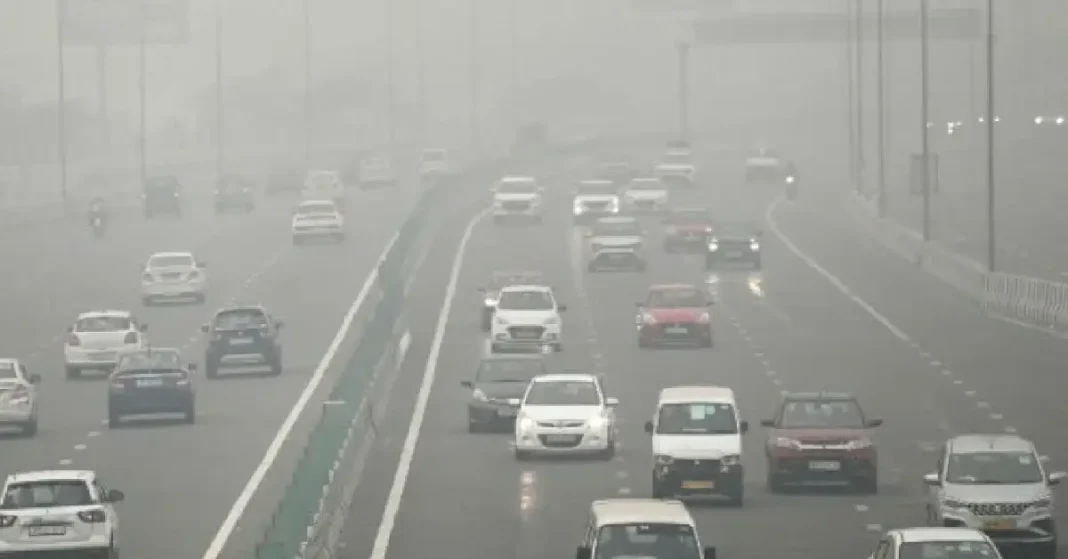
Air quality worsens in cities as temperatures go down
Air quality deteriorated sharply across several major cities of Pakistan on Saturday as falling temperatures and unfavourable weather conditions intensified smog and air pollution, raising serious public health concerns.
According to air quality monitoring data, Lahore ranked as the second most polluted city in the world, recording a hazardous particulate matter (PM2.5) level of 286. Karachi followed closely, ranking third globally with an Air Quality Index (AQI) reading of 233.
Peshawar recorded the worst air quality in Pakistan, with particulate matter levels surging to an alarming 537, placing the city firmly in the “hazardous” category. Other cities also reported dangerous pollution levels, with Faisalabad measuring 384, Khanewal 304, and Multan recording 208 particulate matters.
Experts attributed the worsening air quality in Pakistan to high moisture levels and changes in wind direction, which have restricted the dispersion of pollutants and created ideal conditions for smog formation. The Commission for Air Quality Management noted that stagnant air and cooler temperatures significantly increase the concentration of harmful particles in urban areas.
Punjab, particularly Lahore, has once again begun to experience smog with the onset of winter, a recurring problem that has plagued the province for years. Last winter, Lahore remained shrouded in thick smog for days, caused by a combination of vehicle emissions, low-quality diesel fumes, industrial pollution and smoke from seasonal agricultural burning.
At its peak last year, air pollution levels in Lahore exceeded 80 times the limit considered safe by the World Health Organization (WHO), triggering a public health emergency. Hospitals reported a surge in respiratory illnesses, eye infections and other pollution-related complications.
In response to severe pollution last year, authorities imposed emergency measures, including school closures, restricted timings for markets, eateries and commercial activities, and advisories urging residents to remain indoors to minimise exposure to toxic air.
With air quality once again deteriorating rapidly, environmental experts have warned that without immediate preventive measures, major cities could face another prolonged smog crisis in the coming weeks, posing serious risks to children, the elderly and individuals with respiratory conditions.