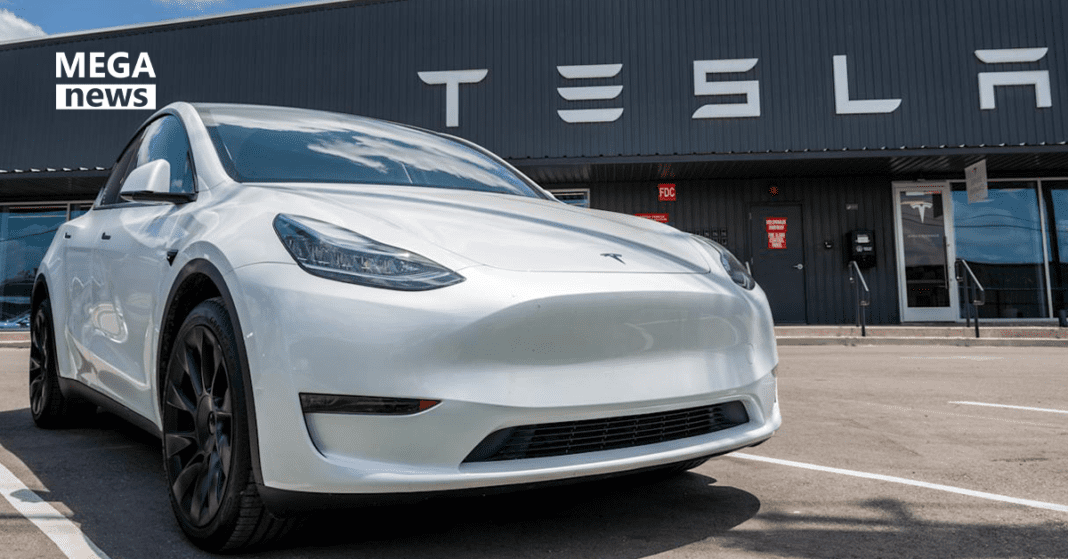
Tesla has officially begun testing its highly anticipated robotaxi service in Austin, Texas—marking a significant moment in its autonomous vehicle journey. After years of promises and delays, the company has launched a small fleet of driverless Model Y cars offering paid rides to select customers. While there’s no one behind the wheel, Tesla staff are currently riding in the front passenger seat as “safety monitors” to ensure smooth operations during this trial phase.
CEO Elon Musk took to X (formerly Twitter) to hail the launch as the result of over a decade of effort. “This is not just about autonomy. It’s about building the future of transportation,” Musk stated. Each ride costs a flat $4.20—a nod to Musk’s characteristic humor—but more importantly, it demonstrates Tesla’s confidence in its Full Self-Driving (FSD) technology, which uniquely relies solely on cameras, without using radar or lidar.
Several influencers and early testers have posted footage of the experience, showing the cars navigating the city streets of South Congress Avenue without human input. The robotaxis are currently limited to select areas, avoiding complex intersections and unfavorable weather conditions for now.
Tesla’s entry into this space directly challenges established players like Waymo and Zoox, both of which use more sensor-heavy systems and operate in other U.S. cities. Unlike them, Tesla is betting entirely on vision-based autonomy, a move that some experts praise for innovation and others criticize as risky. Philip Koopman, a professor at Carnegie Mellon University, cautions that reliable large-scale deployment may still be years away.
The Texas pilot is not without controversy. State lawmakers have raised concerns about launching robotaxi services before new autonomous vehicle regulations come into effect this September. These upcoming laws will require companies to obtain permits, share safety protocols, and develop emergency response frameworks.
Despite the pushback, Tesla seems determined. The Austin launch isn’t just a publicity stunt—it’s a crucial step toward the company’s bigger vision: a custom-designed robotaxi, dubbed the “Cybercab,” expected to be unveiled later this year. Tesla plans to scale the service to other cities, but much depends on how this trial performs both technically and publicly.
Ultimately, Tesla’s robotaxi test in Texas is more than just an experiment—it’s a statement. The company is betting big on autonomy as a future business model. If successful, this test could transform urban mobility and redefine Tesla not just as a carmaker, but as a leader in next-generation transportation.