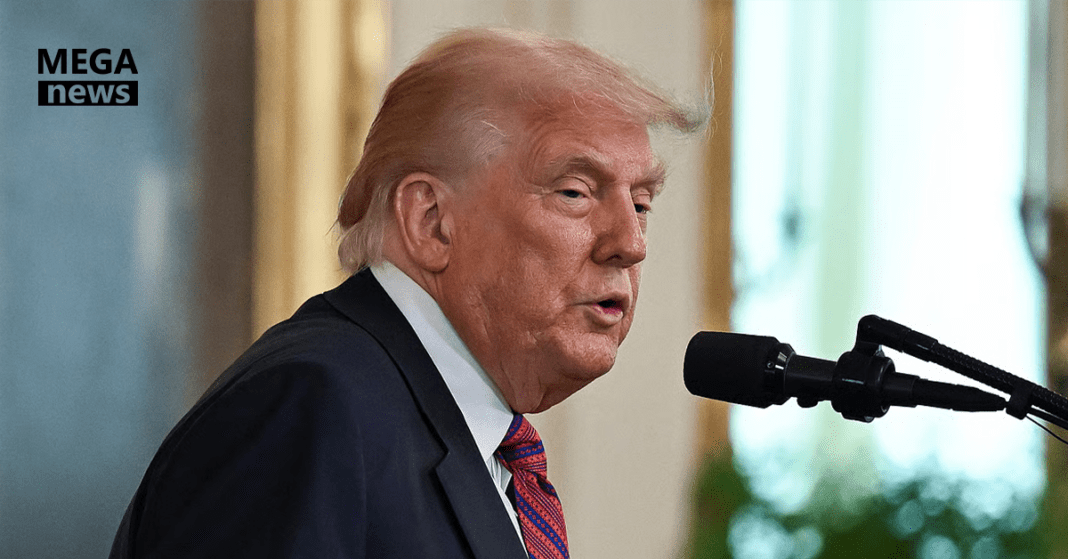
US President Donald Trump has taken a dramatic step in his escalating online feud with Russia by ordering the deployment of two nuclear submarines closer to Russian territory. This move marks a rare public acknowledgment of U.S. nuclear force positioning and signals a sharp uptick in tensions between Washington and Moscow amid ongoing hostilities in Ukraine and global disputes over tariffs.
The tensions flared after days of heated social media exchanges between Trump and Dmitry Medvedev, Russia’s deputy security council chairman and former president. Trump announced the submarine deployment on his Truth Social platform, citing “highly provocative statements” made by Medvedev. While he did not specify whether the submarines are nuclear-powered or nuclear-armed, the strategic tone of the message suggested readiness for escalation if the threats proved genuine.
In a subsequent interview, Trump confirmed that the submarines were “closer to Russia” and emphasized that the United States must remain prepared. He added that he hoped the Russian rhetoric was merely talk and not a prelude to action. The U.S. Navy keeps the details of its nuclear deployments classified, but any move of this nature sends a clear geopolitical message.
The escalation comes just as Russian President Vladimir Putin revealed that Moscow has begun mass production of its hypersonic nuclear-capable Oreshnik missile, with plans to deploy them in Belarus by the end of the year. Speaking alongside Belarusian President Alexander Lukashenko, Putin confirmed that missile deployment positions had already been selected and construction was underway.
Trump has issued an August deadline for Russia to take steps toward ending the Ukraine war, warning of new sanctions if Moscow fails to comply. Despite these threats, Russia’s military campaign remains intense, with July marking a record month for drone attacks on Ukrainian targets. A recent missile and drone strike on Kyiv killed 31 civilians, underscoring the deadly pace of the ongoing war.
Putin reiterated his stance that peace is possible, but only if Ukraine surrenders territory and abandons its ambitions to join NATO—conditions that remain unacceptable to Kyiv and its Western allies. This intransigence continues to fuel international instability, especially as nuclear rhetoric rises from both sides.
READ MORE: Trump Criticizes India-Russia Trade Ties, Announces 25% U.S. Tariff on Indian Imports
The verbal confrontation between Trump and Medvedev has also intensified. Trump reacted to Medvedev’s comments about Russia’s so-called “Dead Hand” nuclear response system with a stark warning, saying such language demands a serious response. Medvedev’s remarks followed Trump’s criticisms of Russia and India’s economic conditions, which Medvedev dismissed while asserting Russia’s military prowess.
In his Newsmax interview, Trump emphasized the weight of nuclear terminology, stating that invoking the word “nuclear” should not be taken lightly. He described it as “the ultimate threat” and said it compelled him to act decisively by repositioning military assets.
Medvedev, who once held a more reformist image, has reinvented himself as an aggressive Kremlin mouthpiece, often using social media to spread ultra-nationalist rhetoric. His recent exchanges with Trump reflect this new persona, as he accused the U.S. president of playing “the ultimatum game” and challenged American resolve.
Trump countered by calling Medvedev a “failed former president” and warned him to “watch his words” or risk stepping into “dangerous territory.” The escalating war of words between two high-profile figures from nuclear superpowers has raised global concerns about the potential for miscalculation or unintended consequences.
As the conflict in Ukraine drags on and global diplomacy frays, the deployment of U.S. nuclear submarines underscores the serious and volatile nature of current international relations. With both the United States and Russia controlling the majority of the world’s nuclear arsenal, their leaders’ words and actions are being closely watched worldwide.