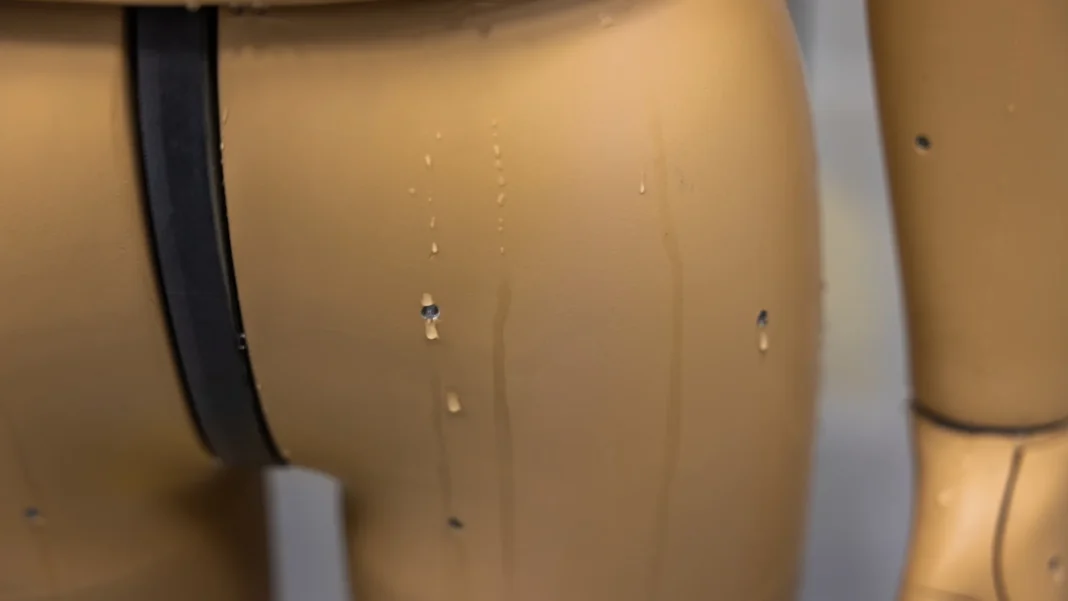
ANDI, the humanoid robot, assists in understanding the effects of extreme temperatures on the human body and aids in developing strategies to combat climate change-induced heat stress.
Arizona State University (ASU) researchers have employed an innovative approach to study the impact of extreme temperatures on the human body by utilizing a breathing, perspiring humanoid robot named ANDI. This cutting-edge technology, developed in collaboration with Thermetrics and funded by a National Science Foundation Major Research Instrumentation Grant, aims to shed light on the physiological responses of individuals to high temperatures, including the often socially awkward phenomenon of butt sweat. The insights gained from ANDI’s research could lead to the development of improved products, methods, and treatments to protect populations as global warming intensifies.
Unraveling the Complexities of Heat Stress:
Despite advances in scientific knowledge, there are still many gaps in understanding how humans biologically react to elevated temperatures. Conducting experiments that expose human subjects to dangerously extreme heat scenarios is ethically challenging. Consequently, researchers like Jenni Vanos, an associate professor in ASU’s School of Sustainability, emphasize the importance of alternative methods for studying heat stress. Vanos explains, “There are situations we know of… where people are dying of heat, and we still don’t fully understand what happened. ANDI can help us figure that out.”
ANDI: The Unique Thermal Manikin
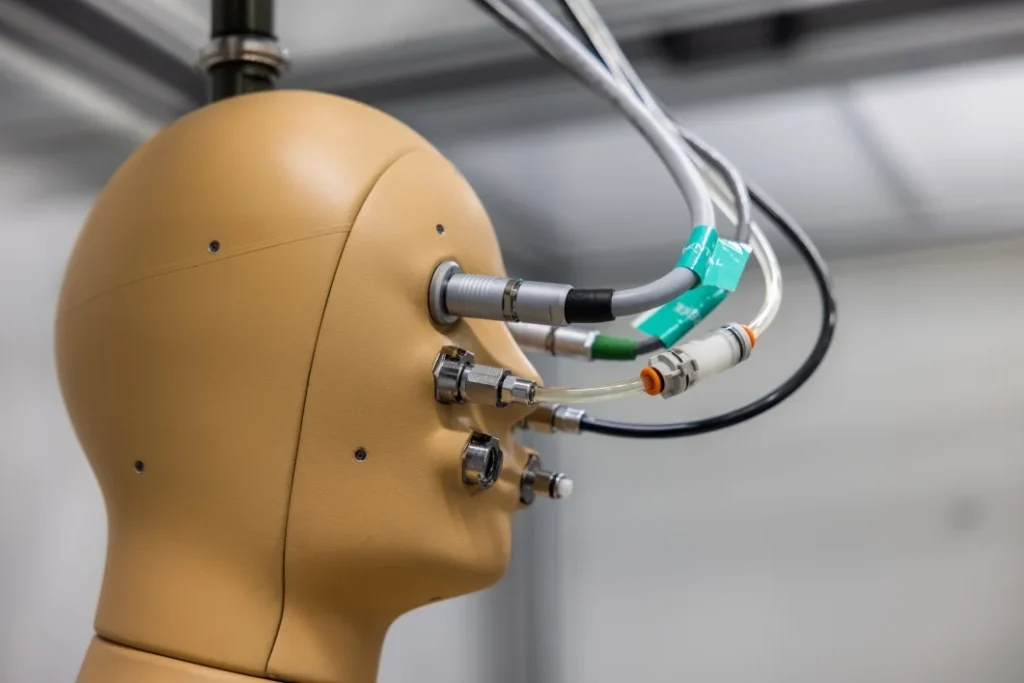
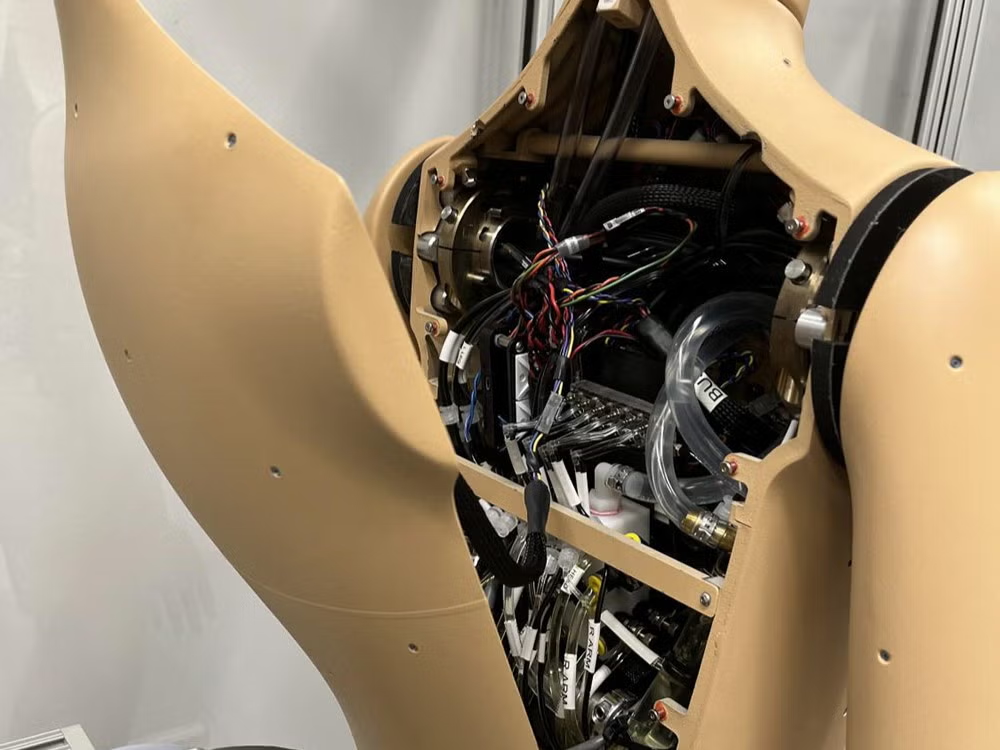
ASU’s ANDI, one of only two such robots currently deployed in a research institution, possesses remarkable capabilities. Unlike its indoor counterparts, ANDI is the world’s first thermal manikin designed for outdoor use, thanks to its innovative internal cooling channels. These channels allow cool water to circulate throughout ANDI’s body, effectively maintaining its overall temperature at a level that enables the endurance of extreme heat. Additionally, the humanoid robot is equipped with sensors that measure various factors influencing human perceptions of heat, including sun brightness and air convection.
ANDI’s versatility is a key asset in the research process. Ankit Joshi, an ASU research scientist and lead operator of ANDI, explains that the robot can be customized to accommodate different body types, health conditions, and age characteristics. For instance, modifications can be made to account for differences in thermal regulation abilities between a healthy individual and a diabetes patient. By incorporating these customized models, researchers can obtain more accurate data on how various populations react to high temperatures.
The Warm Room: Simulating Real-World Heat Exposure
Within ASU’s specially constructed “Warm Room,” ANDI carries out its research. This chamber replicates heat-exposure scenarios observed in different regions around the world, incorporating factors such as wind, solar radiation, and temperatures reaching as high as 140 degrees Fahrenheit. In this controlled environment, ANDI effectively measures human sweating mechanics, including changes in core and skin temperatures.
However, the research team aims to expand ANDI’s capabilities beyond the confines of the Warm Room. In an upcoming endeavor, ANDI will be accompanied by a non-humanoid companion named MaRTy, ASU’s biometeorological heat robot. Together, they will navigate ASU’s hot campus, with MaRTy measuring the heat experienced by a human body, while ANDI records the corresponding physiological responses.
Read More: A cooking robot was unveiled at World Travel Catering Expo
Holistic Approach to Combatting Rising Temperatures:
The researchers at ASU acknowledge that there is no single solution to adapting to rising temperatures. Konrad Rykaczewski, an associate professor in ASU’s School for Engineering of Matter, Transport and Energy and the principal investigator of the study, emphasizes the need for a holistic approach. While the study aims to provide valuable insights, Rykaczewski cautions against expecting a “silver bullet” solution. The researchers explore a range of possibilities, including the design of improved cooling clothing and the development of exoskeleton backpacks specifically engineered to assist wearers in cooling down.
As the global climate continues to change, the invaluable data generated by ANDI and its collaborative efforts with MaRTy hold the potential to inform strategies that ensure the well-being and safety of individuals in increasingly hot environments.