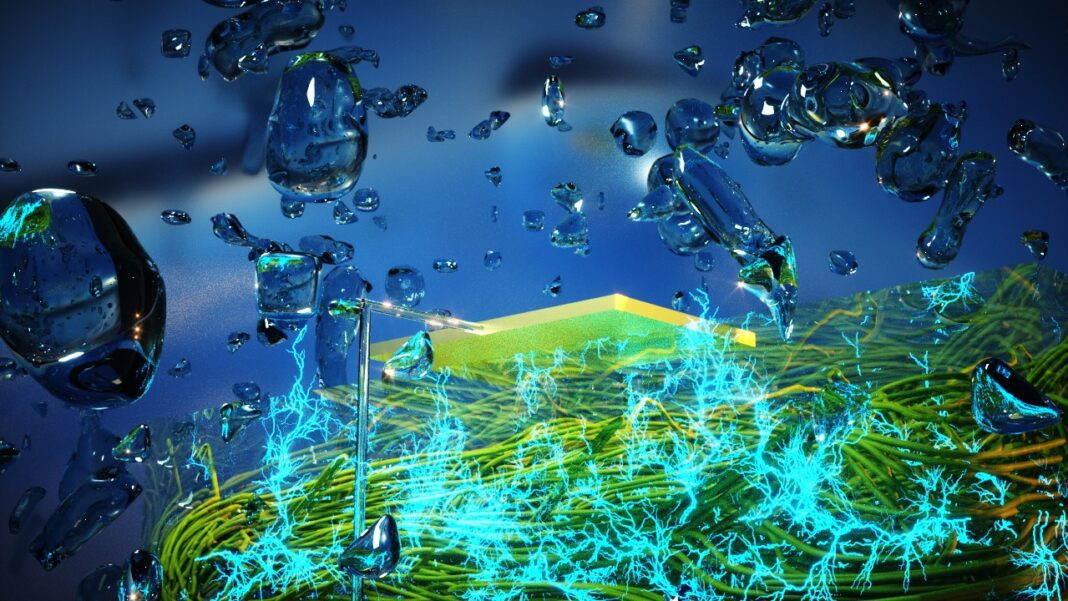
Bacterial material that can generate electricity out of thin air has been developed by scientists.
In a groundbreaking study, researchers from the University of Massachusetts Amherst have delved deeper into the discovery that electrical currents surrounding us can be harnessed using a material derived from living organisms. Their findings, detailed in a paper published in the journal Advanced Materials, introduce the “Air-gen effect.” By cultivating conductive nanofilms from bacteria capable of extracting electricity from water vapor present in the air, Jun Yao, an electrical engineer, and his team have developed a method to reliably and continuously produce electricity from the surrounding environment.
The revolutionary research conducted by Jun Yao and his team at the University of Massachusetts Amherst opens up exciting possibilities for sustainable energy production. The Air-gen effect involves harnessing electrical energy from the air by leveraging the electrical charges present in water droplets.
These droplets, akin to a miniature cloud, carry an electric charge. While lightning bolts can be generated from these charges, capturing electricity from them in a controlled and reliable manner has remained a challenge until now.
Yao and his team have succeeded in developing a technique for producing an artificial, miniature cloud that continually generates electricity. This breakthrough offers immense potential for capturing and utilizing electricity from natural sources, providing a sustainable and predictable energy solution
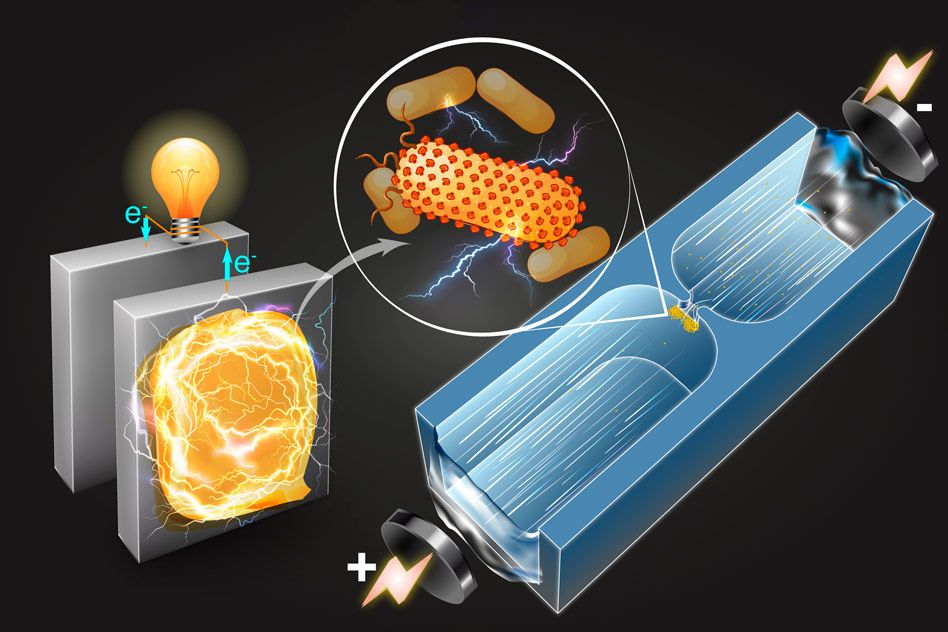
By cultivating conductive nanofilms from bacteria, the researchers have effectively tapped into the electrical potential of the air, paving the way for innovative energy capture techniques.
The process of harnessing electricity through the Air-gen effect begins by cultivating a specialized nanofilm made up of electrically conductive protein nanowires derived from bacteria.
These nanowires possess unique properties that enable them to generate electricity from moisture in the air. When exposed to atmospheric water vapor, the nanofilms facilitate the movement of electrons, thereby producing a small electrical current.
The practical applications of the Air-gen effect are extensive and diverse. This revolutionary technology could potentially power small electronic devices or sensors that operate in remote areas, where access to traditional power sources is limited.
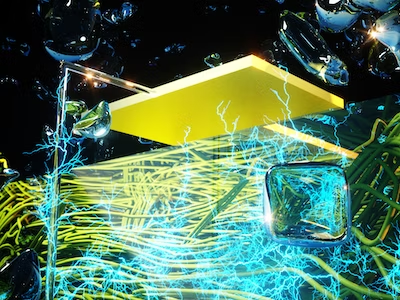
It offers a promising solution for harvesting renewable energy on a global scale, reducing our dependence on finite resources and mitigating the environmental impact of conventional energy production. The potential implications of the Air-gen effect extend beyond its immediate applications. As researchers continue to refine and optimize this innovative technology, the scalability and efficiency of energy production from the surrounding environment will undoubtedly improve. The ability to generate electricity from the air opens up new avenues for sustainable power generation, complementing existing renewable energy sources such as solar and wind.
Further exploration of the Air-gen effect could lead to the development of large-scale systems capable of capturing electricity from the atmosphere on a significant scale.
This could revolutionize the way we think about energy generation and distribution, enabling us to tap into the vast electrical potential that surrounds us.
Moreover, the utilization of living organisms in the Air-gen effect highlights the remarkable potential of biomimicry in engineering solutions.
Nature has evolved highly efficient and sustainable processes over billions of years, and by harnessing these natural mechanisms, we can create innovative technologies with minimal environmental impact.
Read More : Scientists discover fungi that can consume plastic
The research conducted by Jun Yao and his team at the University of Massachusetts Amherst, unveiling the Air-gen effect, represents a significant step forward in sustainable energy production. By tapping into the electrical potential of the air through conductive nanofilms derived from bacteria, this pioneering technology allows for the continuous generation of electricity from the surrounding environment.
The Air-gen effect holds immense promise for a greener future, providing a predictable and renewable energy source that could revolutionize the way we power our world.