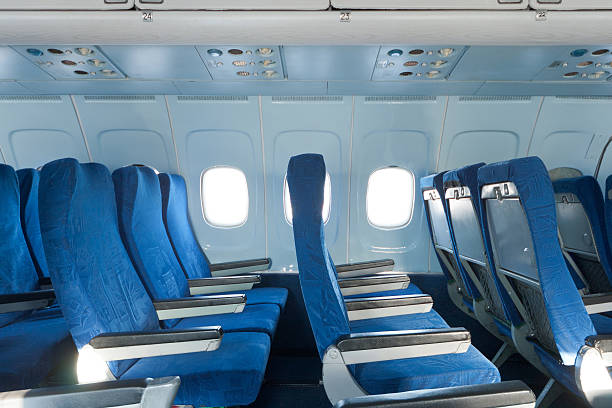
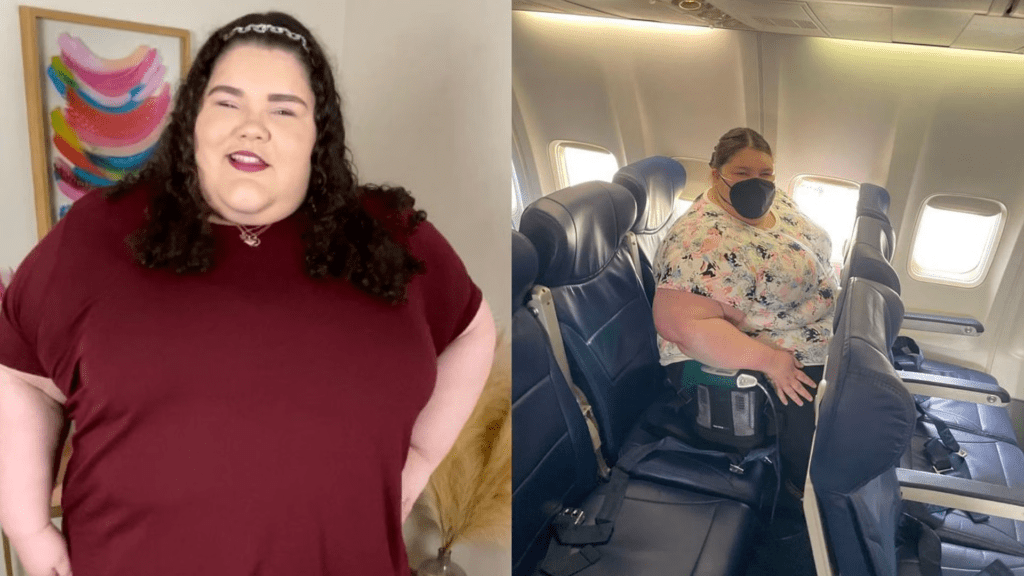
The shrinking size of airplane seats and the increasing global population of overweight and obese individuals are creating challenges for plus-size travelers. With more passengers struggling to fit into standard seats, airlines have implemented varying policies regarding extra seating for larger passengers. The lack of uniformity and transparency in these policies has led to confusion and frustration among travelers. Jae’lynn Chaney, a plus-size travel influencer, just started a petition requesting that the Federal Aviation Administration (FAA) require all airlines to have a thorough customer-of-size policy. This article explores the issue of discriminatory airline seat policies and advocates for fair treatment of plus-size travelers.
Policy Variation and Confusion
Airlines differ in their guidelines for accommodating plus-size travelers, leading to inconsistency and difficulty for informed passengers. Some airlines require customers who need extra seating to purchase an additional seat in advance, while others refund the cost if empty seats are available after takeoff. However, a universal standard is lacking, leaving travelers struggling to navigate the policies effectively. Chaney and Charles Leocha, co-founder of airline consumer advocacy group Travelers United, emphasize the need for standardized policies to eliminate misunderstandings.
National and International Policies
Airlines are not allowed to charge customers varying tickets depending on their body size outside of the US thanks to the Australian Consumer Law. Canada’s “one person, one fare” policy protects domestic travelers from being charged more for an extra seat, considering obesity a recognized disability. However, this rule does not extend to international flights, leaving plus-size travelers obligated to purchase an extra seat for long-distance journeys. The disparity between domestic and international travel policies highlights the need for consistent guidelines.
Advocating for Fair Treatment
Chaney’s petition, which has garnered over 17,000 signatures, calls for accessible additional seats for customers of size who require more space. The petition argues that these passengers should be provided with extra seats at no additional cost to ensure their comfort, safety, and the well-being of those around them. Chaney, who has personal experience with the tight fit of airplane seats, perceives policies requiring plus-size travelers to purchase an extra seat as discriminatory. She emphasizes that they are essentially paying twice for the same experience compared to passengers with smaller bodies.
The Call for Dignity and Respect
Chaney dismisses the notion that plus-size travelers are seeking special treatment, asserting that they simply desire the same dignity and respect given to passengers with smaller bodies. Charging larger passengers for two seats is viewed as a human rights issue by Canadian air passenger rights advocate Gabor Lukacs. Lukacs argues that being a large-size person is not a choice and that charging double fare lacks justification. He highlights the absence of discounts for smaller-sized individuals or children, despite their lower fuel consumption during transportation.
Read more: Indian Women Pilot takes All-Female Hajj Flight to Saudi Arabia
Discriminatory airline seat policies disproportionately affect plus-size travelers, who face additional expenses and discomfort while flying. With the average width of airplane seats decreasing and the global population becoming larger, it is crucial for airlines to adopt standardized policies that prioritize the well-being and comfort of all passengers. By providing accessible additional seats to customers of size, airlines can ensure fair treatment and uphold the principles of dignity and respect for every traveler, regardless of body size. Addressing this issue not only benefits plus-size travelers but also promotes inclusivity and equality in the airline industry.