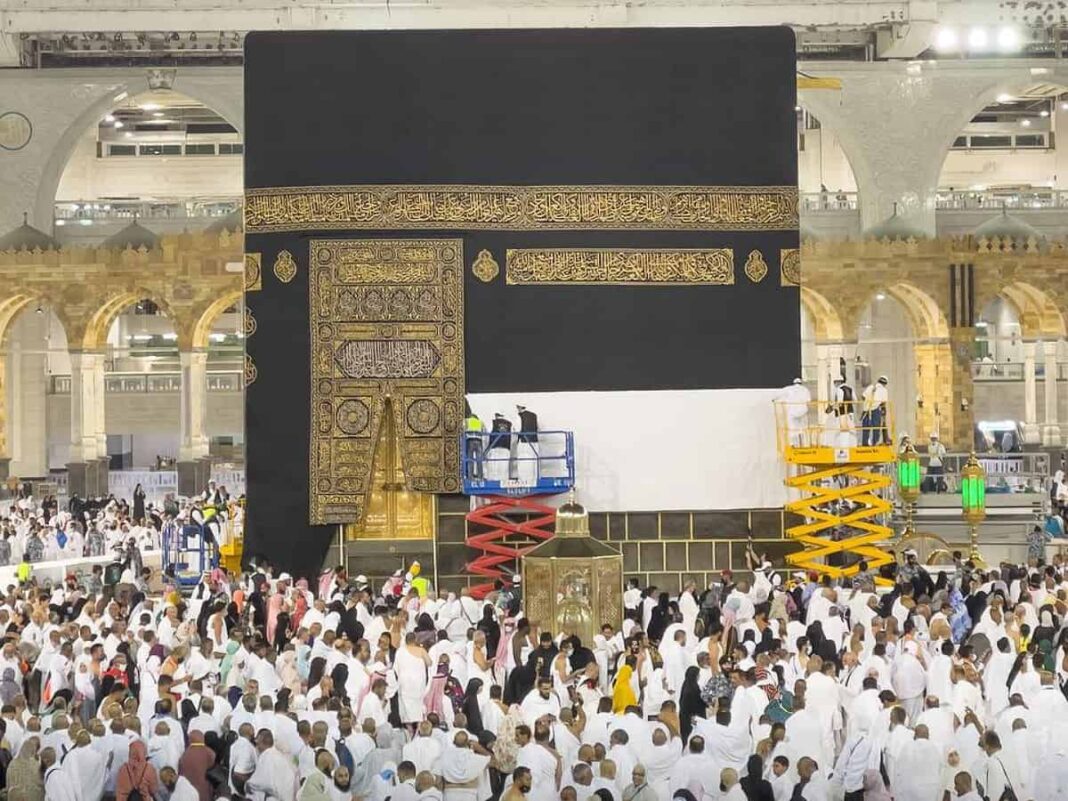
Kiswah Raised and Covered with Ihram to Protect Kaaba:
Riyadh: In preparation for this year’s Hajj, officials in Makkah have elevated the Kiswah, also known as Ghilaf e Kaaba, to protect the revered Kaaba from potential damage. The Kiswah, the black cloth covering the Kaaba, has been raised by three metres to avoid any untoward incidents. Additionally, the lower portion of the Kiswah has been covered with a white cotton fabric, known as Ihram, measuring two metres on all four sides.
Dr. Abdulrahman Al Sudais Leads Replacement Ceremony:
Dr. Abdulrahman Al Sudais, the general president of the Holy Mosque and the Prophet’s Mosque, personally oversaw the replacement of the Kiswah on the Kaaba’s lower portion. Accompanied by a team from the King Abdulaziz Complex, Dr. Al Sudais ensured that the process was carried out with precision and reverence.
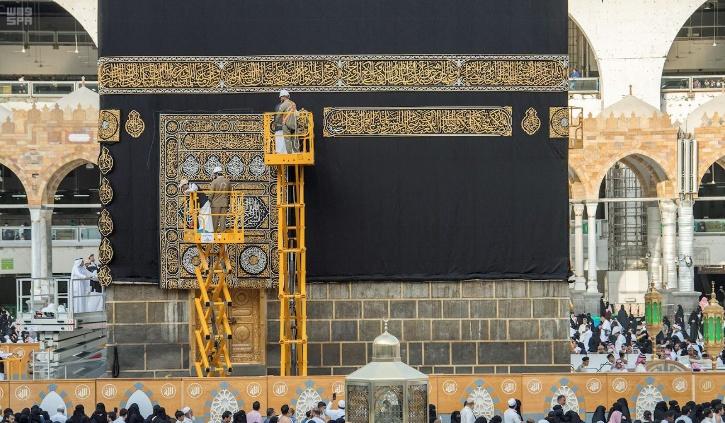
Change in Tradition: Kiswah Replacement Date Shifts
Traditionally, the process of changing the Kiswah occurs on the 9th of Dhul-Hijjah, the last month of the Islamic calendar. However, in 2022, a decision was made to change the date to the first day of Muharram. This adjustment allowed for better logistical planning and coordination of the intricate task of replacing the Kiswah.
The Symbolic Kiswah: Material and Significance
Weighing an impressive 670 kilograms, the Kiswah is crafted from raw silk and is entirely black in color. The fabric is adorned with verses from the Quran, meticulously woven using gold-plated thread. Approximately 120 kilograms of gold and 100 kilograms of silver threads are used to create the intricate calligraphy of the holy verses. The Kiswah belt comprises six separate pieces, adding to the grandeur and beauty of the overall design.
Read More: Largest ruby ever to come to auction sells for record-breaking US$34.8 million
Hajj 2023: A COVID-Free Gathering of Pilgrims
Hajj, one of the largest religious gatherings in the world, holds great significance for Muslims worldwide. Considered a religious obligation for every healthy and financially capable Muslim, the pilgrimage is expected to begin on June 26 this year. In a positive development, the Haj will not be constrained by COVID-19 restrictions, allowing a substantial number of pilgrims to participate in this sacred event.
As anticipation builds for the Hajj, the recent raising and replacement of the Kiswah signify the attention and care taken to preserve the Kaaba’s sanctity. Pilgrims from around the globe eagerly await the opportunity to embark on this spiritually enriching journey, following in the footsteps of millions who have completed the Hajj throughout history. With the absence of COVID-19 restrictions, this year’s Hajj promises to be a momentous occasion, uniting Muslims in a celebration of faith, devotion, and unity.