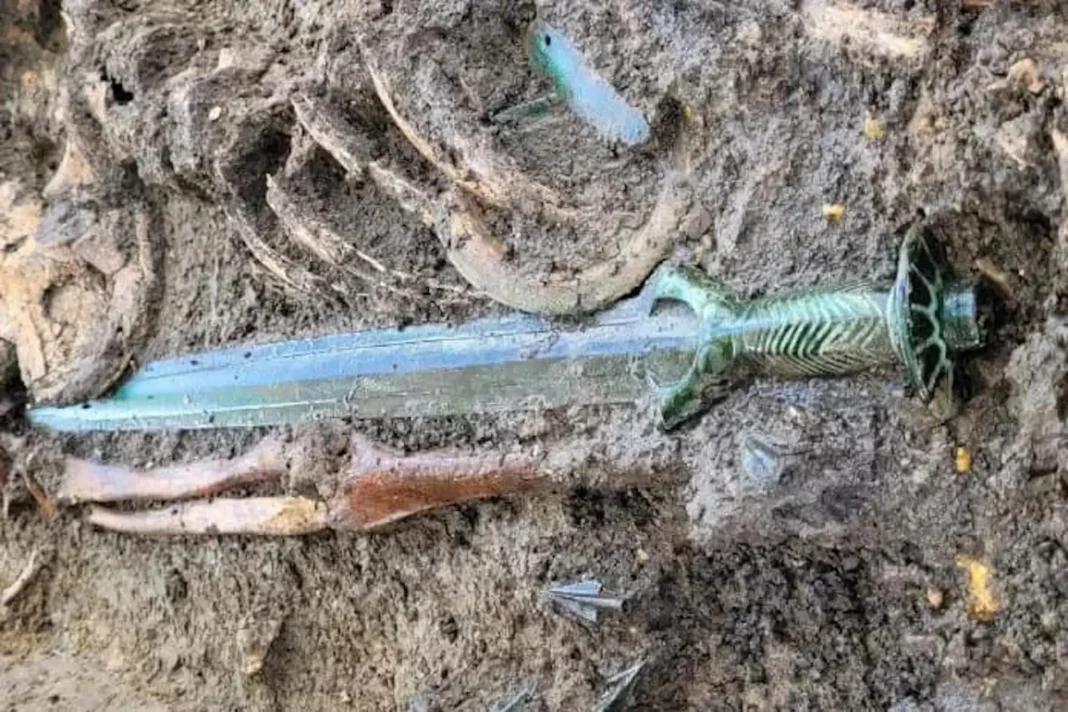
Nördlingen, Bavaria – In an extraordinary archaeological discovery, a bronze sword from the Bronze Age has been unearthed in the town of Nördlingen, Bavaria, shedding new light on ancient warfare practices. Dating back to the 14th century B.C., the sword’s impeccable preservation has amazed experts, with its gleaming appearance almost as striking as the day it was crafted.
An Exceptional Find:
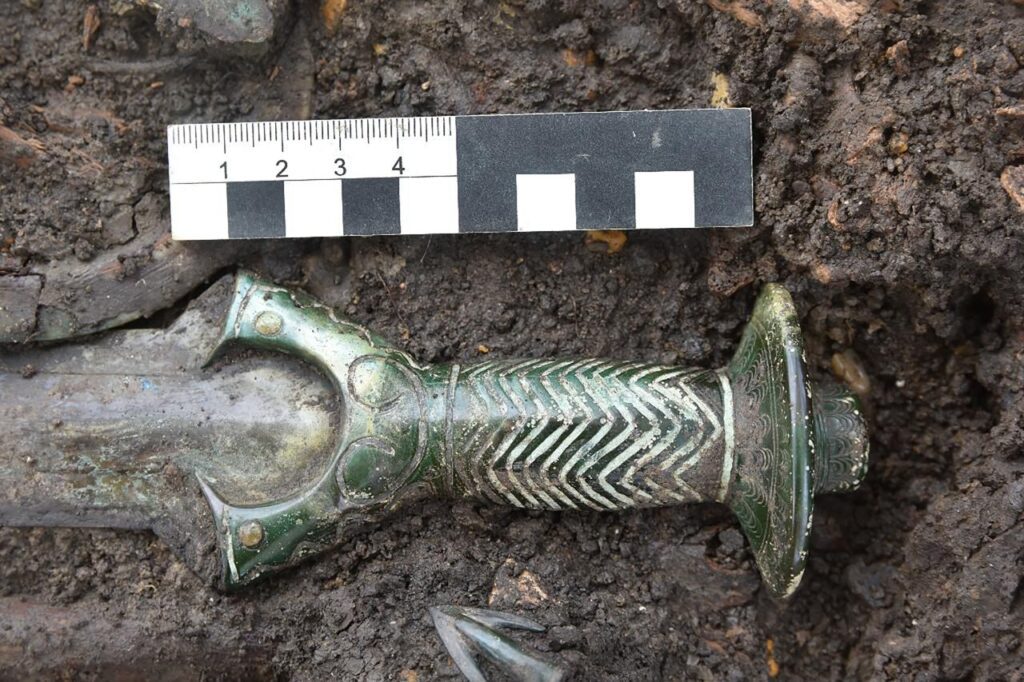
Archaeologists from the Bavarian State Office for Monument Protection made the remarkable find during recent excavations in Nördlingen. The bronze sword, estimated to be over 3,000 years old, belongs to the category of bronze full-hilt swords, characterized by their octagonal hilts crafted entirely from bronze. Such swords, known as Achtkantschwert in German, were highly intricate to produce, requiring intricate casting techniques and elaborate decoration.
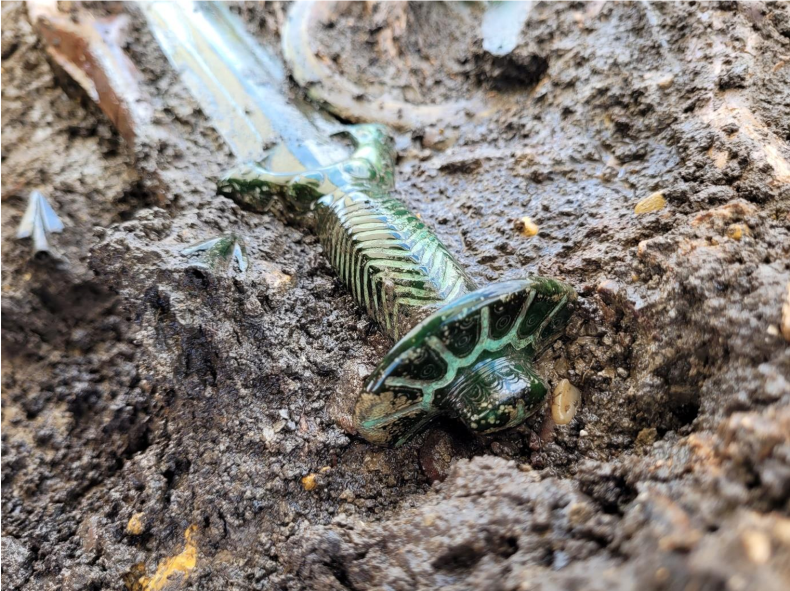
Uncommon Octagonal Shape:
The octagonal shape of the sword is a rarity, as it demanded the exceptional craftsmanship of the most skilled blacksmiths. These blades, produced using a complex overlay casting technique where the handle is cast over the blade, also feature detailed inlays and hallmarks. The presence of only implied rivets further adds to the sword’s unique attributes.
Origin and Significance:
Octagonal swords were exclusively manufactured in two locations in Germany during the Bronze Age—one in the north and one in the south. However, pinpointing the exact origin of this particular sword remains a challenge. The find is all the more significant due to the fact that many burial mounds in the region where the sword was discovered had been previously looted and opened.
Mysteries in the Grave:
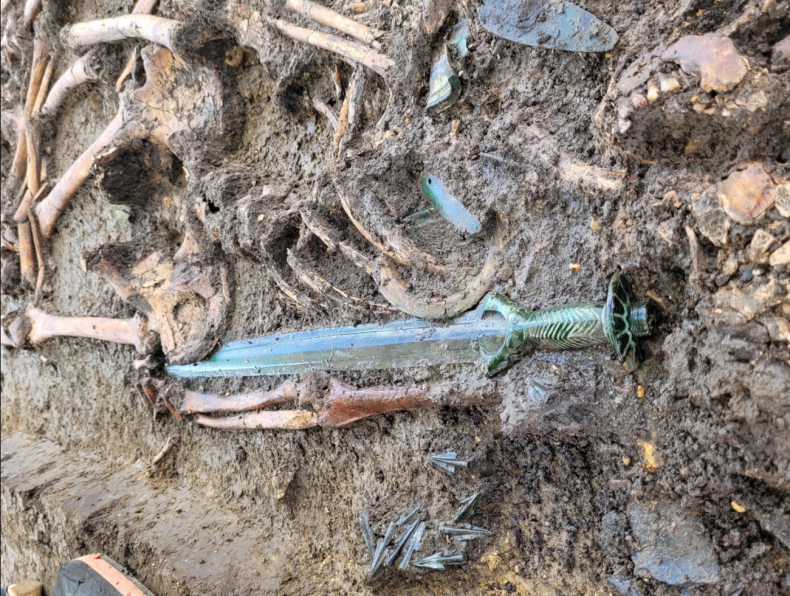
The sword was found within a burial site containing the remains of a man, a woman, and a child. Further investigation is needed to determine the relationship between the individuals, as it remains unclear whether they were related or what their connections might have been. The discovery of this intact burial site provides a valuable opportunity to unravel the social and cultural aspects of Bronze Age communities in the region.
A Weapon of Warfare or Ceremonial Symbol?
While there is no evidence of wear on the blade, indicating that it may not have seen combat, experts speculate that its balanced center of gravity suggests its suitability for use as a functional weapon capable of inflicting slashing attacks on opponents. The question of whether the sword served a ceremonial purpose or was intended for actual combat awaits further analysis.
Read More: 65 Million Years Ago, Dinosaurs Drank Same Water You Are Drinking Today
Unveiling Ancient Secrets:
The Bavarian State Office for the Preservation of Monuments is poised to conduct in-depth research and analysis to gain further insights into the sword’s historical context and the grave in which it was discovered. The exceptional condition of the sword makes it a rarity among finds from this period. The importance of this discovery cannot be overstated, as it adds to our understanding of Bronze Age culture and the advancements in metallurgy and weaponry during that time.
As experts delve deeper into the mysteries surrounding the sword and its burial context, the find promises to uncover valuable information about the lives, relationships, and customs of the ancient inhabitants of Bavaria.
Mathias Pfeil, the head of the Bavarian State Office for the Preservation of Monuments, expressed excitement about the discovery, acknowledging the need for further examination. This extraordinary find holds the potential to reshape our understanding of Bronze Age societies and their sophisticated craftsmanship.